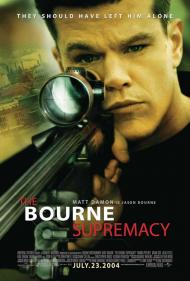




The Bourne Supremacy is a cut above your average fantasy world espionage thriller. Its attention to detail and realism put it about as far from the world of James Bond as it is possible to get while remaining in the same genre. And perhaps most surprising of all in a Hollywood movie, here is a film where a sequel actually builds off of its predecessor, rewarding those who saw the original, while still providing enough detail so that newcomers won't be lost.
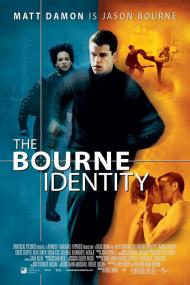
When the story opens, Jason Bourne (Damon) is living in India with Marie (Potente), the woman he met and fell in love with in The Bourne Identity. Two years have passed since the events of the first film and Jason is no closer to recovering his memories, apart from the few flashes of insight that come to him in his dreams.
His past hasn't forgotten about him however, and his peaceful life is shattered when he is framed for the murder of a CIA agent in Berlin. After an assassin is sent to kill him, Bourne is back on his way to Europe to figure out who's setting him up and trying to get rid of him.
After this initial setup, the rest of the film is nonstop action. But this is not sanitized Hollywood action, although it's not particularly bloody either. It just contains a level of realism rarely seen in this type of movie.
At one point Jason goes to visit a CIA operative to get information and a fight ensues. But this is not a perfectly choreographed fight scene with each of them doing amazing stunts and inhuman moves. It's two men scrabbling, punching, kicking, and finally rolling around the floor. The jerky hand-held camera work -- keeping the action just slightly out of focus -- adds to the sense of realism.
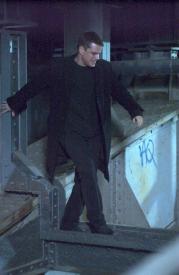
Later, when Bourne is trying to escape from the police by train, he actually stops to check the schedule, nervously scanning the listings. Further on, when driving through Moscow, he has to check a map. At one point, he jumps off a bridge and hurts his leg. In later scenes, he's still limping! When's the last time you saw a movie hero suffer the effects of an injury later on in a film? Small things, I know, but each of them builds on the other, and together they create a unique cinematic world.
I wasn't a fan of The Bourne Identity, finding it too generic, and I had low expectations for its sequel. Perhaps it was the change in directors that marks the dramatic change from Identity to Supremacy. Paul Greengrass helmed this one, while Doug Liman directed the first. Whatever the reason, The Bourne series has found its voice and taken a definite turn for the better.