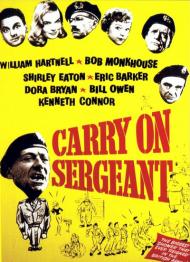



The Carry On films are Britain's longest running film series, comprising 31 films from 1958 to 1992. They are low-budget comedies, featuring a regular troupe of actors, whose humor is based largely on innuendo and double-entendre, with the humor becoming slightly more raunchy as the series progressed. By today's standards however, the jokes are all rather mild and often seem quaint. This is particularly true of Carry On Sergeant, the first film in the series, before the series formula had been perfected.
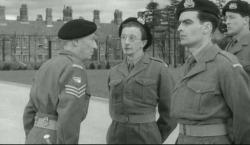
British institutions are often the target of the films' humor and here the jokes are aimed at National Service, which didn't end in Britain until 1960. The plot is simple and rather silly, while also being slightly more sentimental than the later films would become. The story takes place over the 10 weeks of basic training for a batch of new recruits in the army, beginning on their first day and ending when they graduate from their training.
The recruits are assigned to Sergeant Grimshaw, played by William Hartnell, 5 years before he would become the first actor to enter the Tardis as the title character in Doctor Who. Grimshaw is retiring and these are to be the last troops he trains. He makes a bet with a fellow sergeant that his new platoon will take the top prize following their training, but naturally, his squad is made up of misfits and ne'er-do-wells.
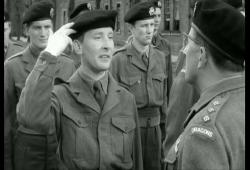
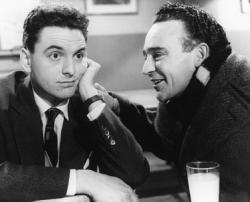
Members of the squad include Charlie; a new recruit who received his call-up papers on his wedding day, Horace; a horrible hypochondriac, Peter Golightly; who lives up to his name and who is obviously supposed to be gay, James; an upper-class effete, and Andy; a guitar playing rock-n-roller. Grimshaw does his best to do what he can with this motley crew, deciding that his best option is to use psychology on them rather than berate them. However, it doesn't take long for him to realize that he doesn't stand much chance of winning his bet unless a miracle happens.
The jokes and humor are all rather gentle and good natured, but still often quite funny nevertheless. Carry On regulars Kenneth Connor as Horace and Kenneth Williams as James, provide many of the film's biggest laughs, as does Charles Hawtrey as Peter Golightly. Hawtrey plays Golightly as a gay stereotype, but he's effectively funny anyway. One seemingly unintentional joke is how all of the actors seem to be in their 30s, rather than the more appropriate age of 18-21.
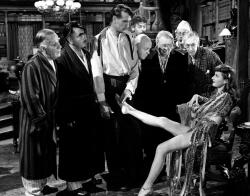
There's even a touch of farce to some of the jokes, such as when newlyweds Charlie and his new bride--played by Shirley Eaton of being painted gold for James Bond fame--try to sneak into a room on the base to consummate their wedding and end up in the room of Sergeant Grimshaw. As I said, it's all a touch silly, but still manages to amuse.
This is a modest little film, running less than 90 minutes. Although it's rather amusing and quite enjoyable, it hardly seems like the birth of something that would become a British institution, but that's exactly what it spawned. Following this movie, there would be 1 or more Carry On films each year for the next 20 years, with one final film produced in 1992. Carry on, indeed.