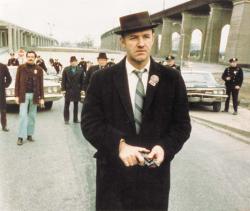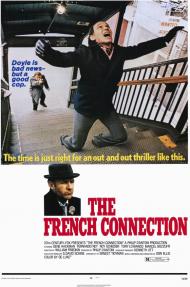



There have been a lot of movies set in New York City, but they almost always get it wrong. They either over romanticize it or go the other way and make it completely gritty. You have When Harry Met Sally on one end of the spectrum and The Warriors on the other end. The French Connection though, is the closest I've ever seen Hollywood come to showing a true depiction of the City on film.
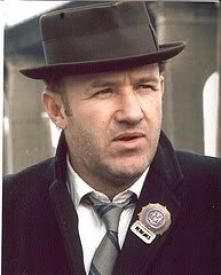
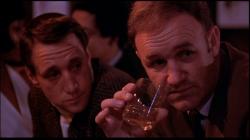
Gene Hackman stars as NYPD Detective Popeye Doyle. He's an old school cop of the very un-PC variety. He's a racist, a drinker, a womanizer and he doesn't mind beating the shit out of a suspect to get the answers he needs. The plot revolves around a major drug shipment coming into the city from France (hence the title). Doyle and his partner Russo (Scheider) use some old-fashioned detective work, staking out buildings and following their suspects by foot and by car to put together the case.
The ways that the movie gets New York right are numerous. It's set in both Brooklyn and Manhattan (showing that unlike most movies there is more than one borough in the city). Popeye lives in a small, unglamorous apartment that looks as though he could actually afford it. Characters ride the subway. There's lots of walking, traffic plays a part in one scene and the city is shown as having a very diverse population. Despite being set in 1971, the depiction shown here is still very reflective of how the City is today and goes way beyond the normal glamour and touristy things usually depicted in the movies or seen by the average visitor.
Of course the most famous thing about this movie, and what it is most remembered for, is the elevated train chase through Bensonhurst Brooklyn, and deservedly so. Like the rest of the movie, it is filmed very realistically. When Doyle (who's in a car chasing the train) hits other cars during the chase, you feel the crunch. A car chase this good wouldn't be filmed again until more than 30 years later in The Bourne Supremacy. It's a classic scene that deserves its reputation.
Hackman as Doyle is terrific and his work won him an Oscar (one of 5 that the film won, including Best Picture). Popeye is one of those iconic characters and Hollywood has been using him as a blueprint for NYPD Detectives ever since. The rest of the cast is good, but the movie is his.
In line with the rest of the realism in the story, the ending isn't quite your normal Hollywood neat ending. It's all resolved. You learn the fate of each of the characters in captions at the end, and while it's a satisfying ending to the story, it's not so satisfying for some of the characters in it.
When people talk about the Golden Age of movies in the 1970s, this is one of the ones that they're talking about.