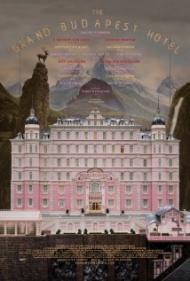



The Grand Budapest Hotel is Wes Anderson's latest cinematic whimsy. It's a period piece set in a fictional country in Eastern Europe in 1932. We arrive in that setting in increments. The movie opens in the modern era with a young woman visiting a writer's monument in a cemetery. She carries the writer's memoirs in her arms. Next the story stops briefly in 1985 where this author, as an older man (Tom Wilkinson), is filming an introduction to his work. Next we visit the year 1968 as a younger version of this author (now played by Jude Law) visits the no longer fashionable titular establishment. He meets the current proprietor (F. Murray Abraham) who regales him with tales of his adventures as a young lobby boy.
The aspect ratio employed by Anderson changes to the traditional square shape once the story proper begins in 1932. (Is it a coincidence that this is the same year that MGM's all-star Best Picture winner Grand Hotel was released?) As with all of Anderson's movies the visual effect is striking. The long shots of the hotel exterior look like something out of a picture book. He also makes good use of panoramic horizontal and zigzag lines involving railroads and other forms of transportation.
His usual troupe of actors show up in various roles. Some have mere cameos like Tilda Swinton (unrecognizable in old lady makeup), and Owen Wilson who gets just one brief scene. Bill Murray (in his seventh Anderson film) and Bob Balaban get just a bit more screen time. Adrien Brody and Willem Dafoe play baddies.
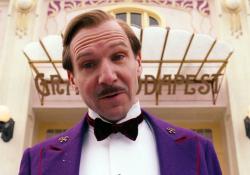
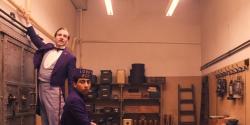
The stars of the movie are Ralph Fiennes and Tony Revolori. Together they make a memorable comic duo. Fiennes is M. Gustave, devoted concierge of the Grand Budapest Hotel. He is fussy in manner and speaks with a flowery elegance. He calls everyone -male or female- darling and is completely unflappable in demeanor. He is a walking billboard of Old World charm and grace in a world where such qualities are quickly dying out.
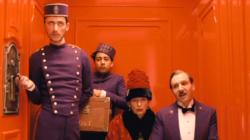
Gustave takes the new lobby boy, Zero (Revolori), under his wing and together they have many zany adventures that includes stealing a painting (entitled Boy with Apple). Gustave winds up in prison. Zero, with the assistance of his girlfriend Agatha (the hotel's pastry chef played by Saoirse Ronan), helps orchestrate a prison break. The story then speeds towards its delightfully quirky conclusion.
The old fashioned setting and storyline are juxtaposed with several modern flourishes. The “f” word is liberally sprinkled throughout the movie. Gustave himself uses it often and coming from him it sounds amusingly incongruous. Anderson once again uses the gimmick of a dead pet being played for laughs. In Moonrise Kingdom it was a dog and in this movie a cat gets thrown from a window to its death.
The story is definitely on the silly side of comedy but it manages to have a bit of heart as well. It leaves the viewer with a sense of nostalgia for the romance and glamor of a vanished world. A world that M. Gustave so desperately clings to and evokes in his everyday life. With the exception of The Royal Tenenbaums, The Grand Budapest Hotel is now my favorite Wes Anderson movie.