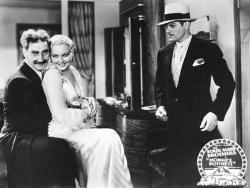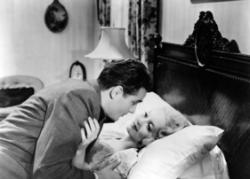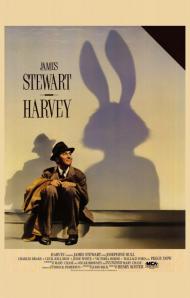



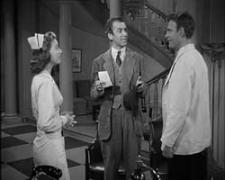
From trying to get Jean Harlow to marry him in Wife vs Secretary (1936), to protecting his family in Shenandoah (1965), James Stewart made a long career out of playing nice guys. It was his stock character, and what his fans always remember him for. Out of all of those good guys, none were more pleasant than Elwood P. Dowd.
Harvey is a large rabbit that only Elwood can see. It showed up shortly after his mother’s death. It is Elwood’s best friend and constant companion. Harvey lives with him and every day they go to some local bars to socialize. Elwood is always eager to meet and talk to strangers, "I always have a wonderful time, wherever I am, whomever I'm with." He politely states.
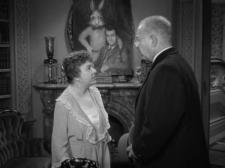
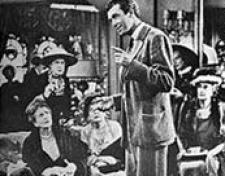
His sister Veta, and her daughter, who also live with Elwood, have a different opinion. They try to keep Elwood out of sight as his "friend" is an embarrassment to them. After he destroys one particular social event at their home, Veta tries to get Elwood committed to a sanitarium, but ends up accidentally committing herself. Comedy ensues as everyone tries to put all of the pieces together. My favorite line is when an orderly is looking for Elwood in a bar and asks if Elwood is alone. The bartender responds, "Well, there's two schools of thought, sir."
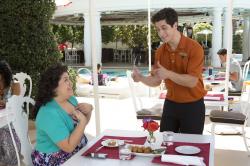
Stewart and Hull played their same roles on the stage together. For the movie, Hull won an Academy Award for best supporting actress. Stewart was nominated for best actor. He would reprise this role in a 1972 television version of Harvey. An orderly at the sanitarium, who has the hots for Veta’s daughter, will be very familiar to anyone of a certain age. He was television's Maytag repairman for 20 years.
The message of Harvey is that crazy is relative. So what if Elwood talks to a huge rabbit. He is still very nice and respectful to everyone. Should he be judged on his imagination instead of his manners? "It's our dreams, doctor, that carry us on. They separate us from the beasts. I wouldn't want to go on living if I thought it was all just eating, and sleeping, and taking my clothes off, I mean putting them on..." Veta explains at one point.
To everyone in the movie, Harvey is a nuisance. To Elwood, he is a gift. He takes him into bars and introduces him to men with problems. In a strange way, they help people. The movie ends with a classic scene of Elwood walking off into the sunrise. He stops, looks to his side and says, "Well, thank you Harvey! I prefer you too."
Oh, do you want to know if Harvey is real or just in Elwood’s imagination? Sorry, I will not spoil it for you. Watch Harvey. Meet the nicest man in the world, and discover that whether or not Harvey is real is actually irrelevant.