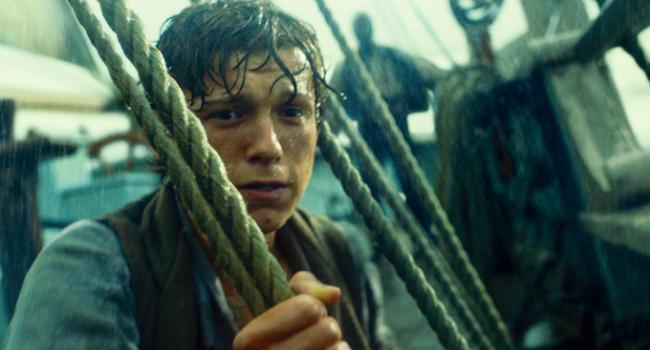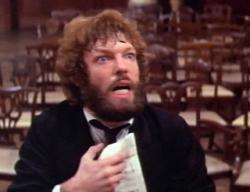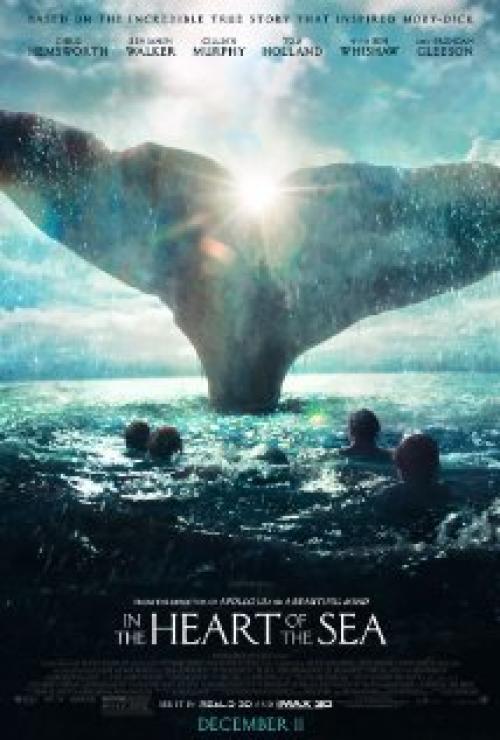



In the Heart of the Sea is the story of Herman Melville taking notes from a sailor, Thomas Nickerson, who survived a whaling expedition that ended in disaster. His account of the whaling ship Essex's demise inspired Melville's fictional classic American novel, "Moby Dick." The story is told in flash back with occasional scenes of Melville and Nickerson having dramatic moments.
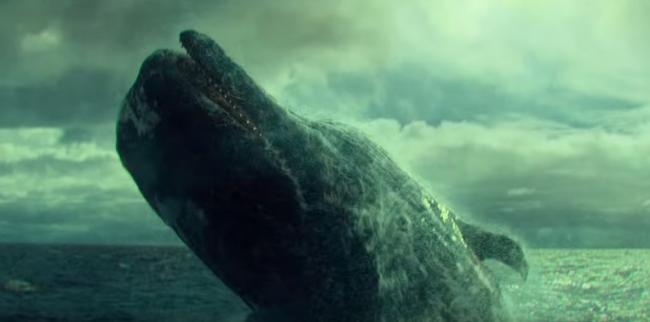
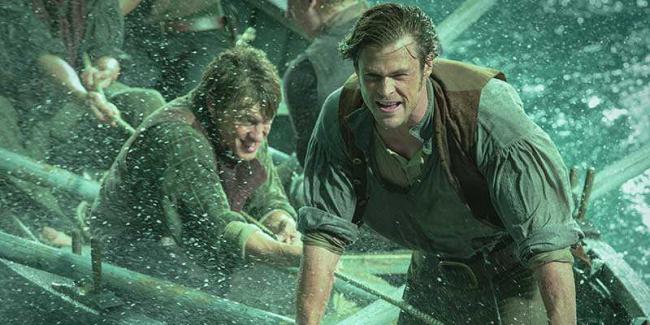
In 1820, the Essex set sail from Nantucket with the goal of finding whales to kill for their blubber as it was a valuable energy source.This real-life maritime tale follows the crew as they make a kill. We are shown all of the gore involved in such an effort. We see them deal with storms and some minor personality conflicts. It all leads to a confrontation between the Essex and a large white whale and then to the harrowing aftermath.
Men stranded at sea is a tale of woe as old as they come. What can make these stories interesting are the men themselves and how they deal with the hardship of starvation, impending doom and each other. In the Heart of the Sea does not break any new ground or bring up any issues we have not already heard of in other tales of survival.
In an effort to create emotional responses from the audience, we are shown several relationships in the hopes that we may connect with at least one of them. The problem is that there are too many relationships touched on but none ever come close to being fully explored. We have the first mate, Owen Chase, who leaves behind a pregnant wife. He does not get along with the captain, who got the assignment because he is related to the ship's owner. Chase has a friend on board with whom he shares some dramatic moments. Melville and an elderly Nickerson reveal their vulnerabilities to each other. Finally, there is young Thomas Nickerson who is green but eager to learn. He looks on Chase with almost hero like worship. Unfortunately, not enough time is spent on any of the relationships to make any of them fully interesting.
We are intended to pray for Chase to be reunited with his wife, but she knows his job takes him away for months at a time so it is not as if she is expecting him home anytime soon. We are supposed to feel the tension between Chase and the Captain, whose job Chase felt should have been his. We should feel something for Chase seeing his friend near death. The only relationship that feels as if it has a satisfactory resolution is the one between Melville and the elderly Nickerson.
The story should have centered completely on young Thomas. He is telling the story after all. How does he have privy to conversations he was never present at? If we were shown this adventure through his eyes alone, we could have had an emotional anchor to cling to. Instead, we just drift from one shallow story line to another. We should have seen Chase's and the captain's relationship through his perspective.
Chase and the Captain's reactions to each other reminded me of Fletcher Christian and Captain Bligh. And speaking of the HMS Bounty, at one point the survivors of the Essex find temporary shelter on an uninhabitable island. If they had drifted some 100 miles in a different direction they would have landed on the very island that the mutineers of the Bounty were hiding on. Talk about a possible interesting crossover.
Every scene that features whales is exciting but that is truly just a small portion of the story. This is an adventure tale and told through the eyes of a teenage boy on his first voyage, it all could have seemed exciting and new. However, as it is told, most of what we get here is frankly old news and none too thrilling.