


Inside Out is just the 2nd original Pixar film since 2009's Up. During those 6 years they released Toy Story 3, Cars 2, and Monster's University, which were all sequels. They also released Brave, which, while not technically a sequel, felt like Pixar's take on the Disney Princess. This movie is not only their most original film since Up, but also the best. It contains heart, humor, and cutting edge computer animation. The three hallmarks of Pixar.
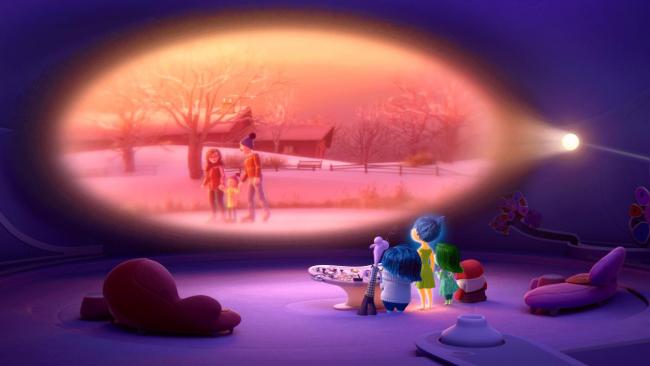
The plot on the surface is very simple. A young girl named Riley and her family move from Minnesota to San Francisco where Riley must learn to adjust to her new home, school, and environment. She goes through the usual growing pains and emotions any child would go through in that situation. The real heart of the story takes place entirely inside Riley's head where her emotions are personified as little beings living and working in the control room that is Riley's brain.
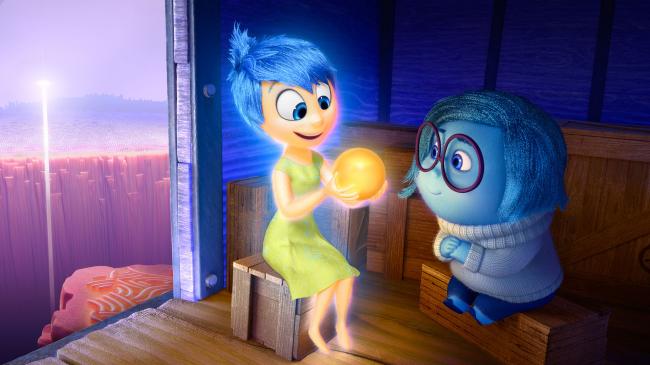
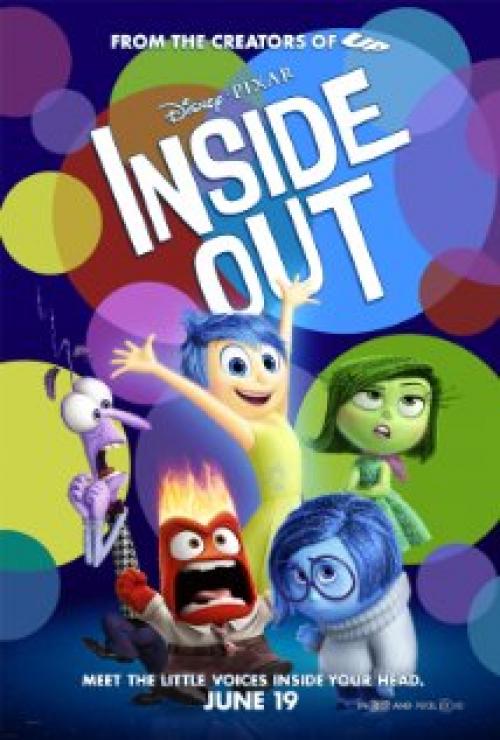
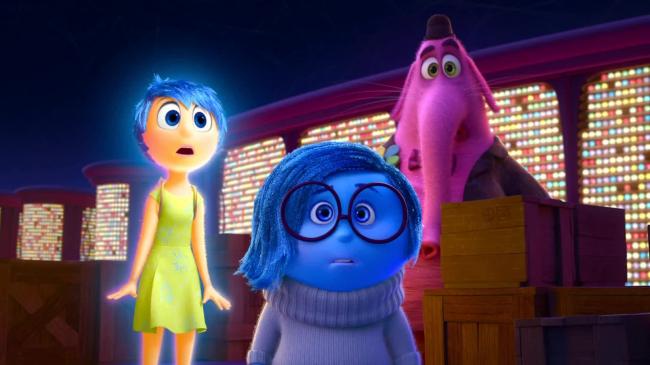
The 5 emotions represented, which the writers whittled down from roughly 20, are Joy, Sadness, Anger, Disgust, and Fear. Joy, voiced by Amy Poehler, is the de facto leader, and the dominant emotion, as you might expect in a child from a happy home. Joy's chirpy optimism keeps things moving along, with the other emotions content to follow her lead. However, when the move starts to get Riley down, Sadness (Phyllis Smith) starts asserting herself, which causes some conflict. When the two polar emotions fight over a memory-represented by a glowing marble- the two of them are accidently ejected from the control room and sent to long term memory storage. The two of them must then find out if they can work together long enough to get back before Riley does something drastic.
In a way, Inside Out is revisiting some of the themes it explored in Toy Story 3. Riley is growing up. She's still a child obviously, but she's approaching puberty and the complexity of emotions that brings. She's no longer guided by one defining emotion at a time.
Perhaps the best example of passing childhood is represented during their journey through Riley's brain, when Joy and Sadness come across Bing Bong, Riley's make-believe friend. Almost completely forgotten now, he wanders the memory stacks. He is only too happy to help the emotions on their journey, with the hopes of being remembered one last time by Riley. And leave it to Pixar to make you misty-eyed over a pink creature who's part cotton candy and part elephant.
Along with the inner-workings of Riley's brain, we are also shown flashes of the inside of her parent's inner-workings. These offer a few chuckles despite being loaded with gender stereotypes straight out of a 1970's sitcom. Funnier than those moments are the similar scenes during the end credits where we see the inside of even more characters, including my personal favorite, the inner-working of a cat's mind.
Like the very best animation, this movie works on several levels. The kiddies might enjoy the bright colors and comical characters, but the grown-ups can see how everything that happens inside Riley's mind is symbolic of what's happening on the outside. Anyone who has ever been depressed will fully understand the loss of joy and sadness at the same time. And there's also a few jokes that will only be understood by the adults, such as a reference to the film Chinatown.
Although I loved Toy Story 3 and enjoyed Monster's University (the less said about Cars 2 the better), it's nice to see Pixar back on top of their form with an original film. It's not just the Best Animated movie of the year so far, but one of the best movies period.