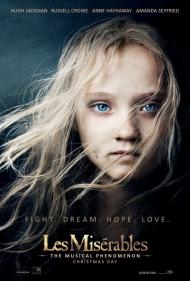



Musical theater fans, as a rule, aren't a very diverse bunch. According to broadwayleague.com, Broadway audiences are rich, white and 70% female. The demographics don't record how many of the remaining 30% are gay men, but it's probably a fairly large portion and of those that aren't, plenty are men who were dragged in by their wives or girlfriends. Myself, I'm of that rarest segment of the audience, a straight man who voluntarily attends musicals on his own. With that in mind, Les Miserables is going to have a challenge finding an audience. When you learn that it's a nearly three hour, sung-through, tearjerker, then that audience becomes even smaller. For fans of the genre though, it has plenty to offer, including a few sure to be Oscar-nominated performances.
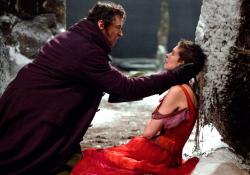
Based on the novel by Victor Hugo, it tells the story of Jean Valjean (Jackman), a former prisoner who spent 19 years in prison after stealing a loaf of bread to feed his starving nephew in early 19th-century France. With the help of a kindly Bishop (played by Colm Wilkinson who originated the role of Valjean in the original London production), Valjean abandons his parole and starts a new life, with a new name and becomes a successful businessman and the Mayor of a small town. Inspector Javert (Crowe) still pursues the fugitive Valjean, whose true identity is eventually discovered, but not before he becomes entangled with the tragic fate of Fantine (Hathaway) and her illegitimate daughter, Cosette (Seyfried). All of their destinies become bound together and are swept into the streets of Paris during the June revolution of 1832.
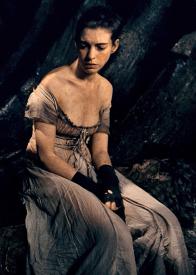
The themes of the film are heavy and melodramatic. They are about redemption, freedom and love. There are several deaths and very sad songs. It's operatic in its tragedy, with Fantine being the most tragic. Hathaway's rendition of one of the film's most famous songs, “I Dreamed a Dream”, is likely to win her the Best Supporting Actress Oscar as well as moisten the eyes of any in the audience with a heart to feel with. “On My Own” is another of the sad song highlights, sung well here by Samantha Barks.
Sacha Baron Cohen and Helena Bonham Carter provide the film's only comic relief as the slimy innkeeper and his wife who perform the musical's most famous and most terminally catchy number, “Master of the House.”
Jackman does good work as Valjean, but Russell Crowe fares less well as Javert. He looks and acts well enough, but just doesn't have the voice to carry the part and his final destiny is weakened because of it.
One of director Tom Hooper's best decisions was to have the actors sing live during filming rather than lip-syncing to a prerecorded soundtrack. It gives the actors a chance to truly act in the moment rather than simply worry about miming properly to their own recording.
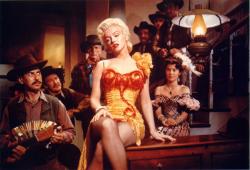
The musical comedy found great success in Hollywood from the 1930s and into the 1960s. The musical epic tragedy, like Les Miserables, filled with sung-through dialogue and giant spectacle that became popular on Broadway and in the West End during the 1980s has never really taken off in the same way. Phantom of the Opera, Evita, Rent and Sweeney Todd have all been turned into films, with lukewarm success, despite their long life on stage. It remains to be seen how Les Miserables will fare.
They're definitely an acquired taste, but if you enjoy this kind of musical, as I do, you'll love Les Miserables. If you don't, you'll probably find it too long and depressing. I definitely think it's going to be the kind of movie that you either love or hate, with very little opinion in between.