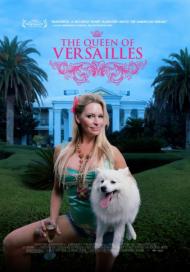



Although it was overlooked by the Academy in the Best Documentary Feature category, The Queen of Versailles did win the U.S. Directing Award at the 2012 Sundance Film Festival, the Grand Jury Prize from the Brisbane International Film Festival, a Best Director Award from the RiverRun Film Festival, and the Special Jury Documentary Feature prize from the deadCenter Film Festival, as well as being nominated for Best Documentary Film, 2012 by the International Documentary Association. Not bad.
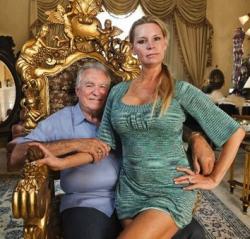
In a nutshell the movie tells of Jackie and David Siegel and their dream to build the largest, most expensive single family house in the United States. It's designed to resemble the famous French palace, hence the title of the movie. The house is being built in Florida and in many ways recalls Xanadu, the famous abode built by Charles Foster Kane in Citizen Kane.
Like Charles Kane the Siegel's love ostentation. Jackie proudly shows off a warehouse filled with five million dollars worth of marble imported from China. The house includes a bowling alley, a movie theater and an entire wing for the children (Jackie and David have seven young children, while the much older David has six grown kids from his first marriage). The finished house will boast 90,000 square feet of living space. The grounds will include two tennis courts and a full-sized baseball field that will double as a parking lot during parties.
What would have been a simple documentary about one incredibly wealthy family's endeavor to build a huge tacky house becomes gripping drama when the financial crisis of 2008 brings the Siegel's business to a screeching halt. David Siegel built the world's largest time share business including a brand new tower in Las Vegas. But virtually overnight he is forced to lay off seven thousand workers and finds himself struggling just to keep his company solvent. Construction on the new mansion is halted as the family deals with cutting back and economizing for the first time.
Jackie at first comes across as a shallow, vain, not very bright, former Miss America with fake boobs and poor taste in clothing and home furnishings. Here are a few out of touch comments made after the money train runs out. When her family is forced to fly on a commercial flight for the first time, one of her young songs asks, “Mommy, what are all these people doing on our plane?” When Jackie rents a car at the airport she asks the clerk at the the counter what her driver's name is as if a chauffeur comes with the car.
Eventually she shows her humanity by helping her husband's discharged employees by opening a thrift store with personal items from their home as well as from many of her husband's hotels for sale on the cheap. For the first time Jackie admits to thinking of others besides herself and her family. Of course this doesn't stop her shopping addiction. She is still shown filling several shopping carts with toys she can no longer really afford. Once home the nanny is shown putting a brand new bicycle in a garage that is already filled with literally dozens of bikes of all sizes. Clearly this woman cannot help herself.
Jackie's teenaged niece comes to live with them. She had been living in poverty, her bedroom was in a basement with a dirt floor. She has the most telling line in the movie when she comments about how it seemed like paradise when she first came to live with her aunt's family but once you get used to being rich you just want more and more material things. Hmm, imagine that.
David Siegel is shown as a man obsessed with his business and with being a big shot. He brags about how he single-handedly got George W. Bush elected and re-elected. He is the type of man that made sure the lights on the sign on his signature Las Vegas hotel were the brightest lights on any building in Vegas. I mean really, who cares about such things?
The Queen of Versailles shows how one family achieved the ultimate American dream only to have it threatened by a financial crisis. Jackie, David and family (including their loyal nanny) are shown as real people. Director Lauren Greenfield does a good job of not editorializing much. For the most part she lets this real American family speak for themselves and the results are fascinating.