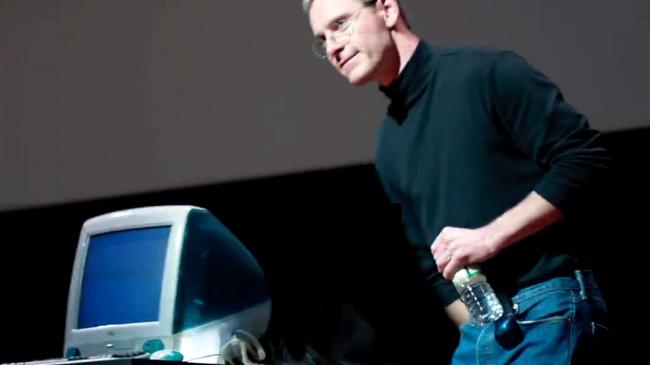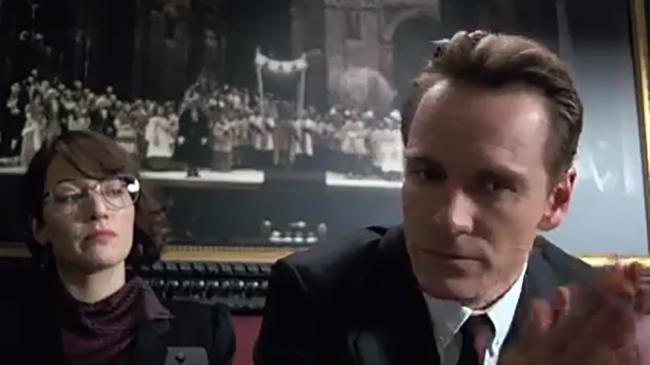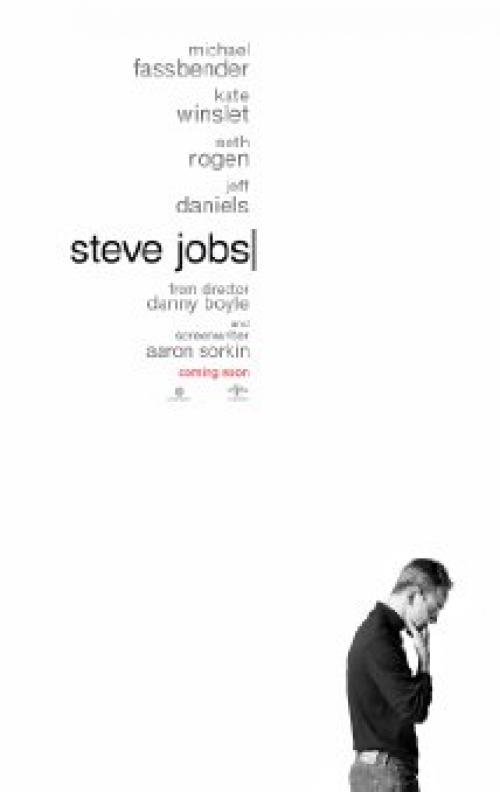



The history of the personal computer is as much about personalities and ego as it is about technology. Steve Jobs, written by Aaron Sorkin, directed by Danny Boyle, and starring Michael Fassbender, keeps the focus very much on those personalities. Although it can't help but include some of the factual history of Apple Computer and the personal computer in general, this is a character study of one man, rather than an all-encompassing look at a company or an industry.
Unlike the more traditionally structured Jobs (2013), which starred Ashton Kutcher as the tech visionary, this story is told in three scenes. Jobs was famous for his product launch presentations and Sorkin's script takes place just prior to three of his most famous. The first is in 1984, when Jobs was the golden boy of the new era of personal computers about to launch the original Macintosh. The second is in 1988, after Jobs' fall from grace and expulsion from the very company he co-founded, when he is about to launch the NeXT computer. And the final is in 1998, after Jobs triumphant return to Apple and his launch of the iMac. Each scene is played out in real time as Jobs confronts recurring personalities from his life.
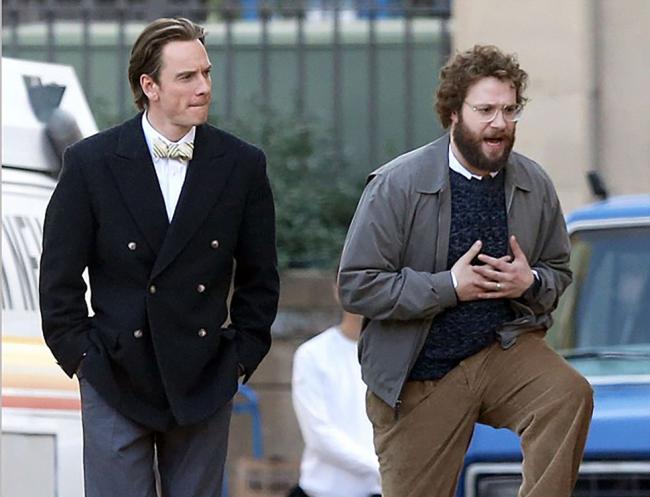
Although Fassbender doesn't really look much like Steve Jobs, he nevertheless embodies his famously temperamental and egocentric characteristics. Jobs was a notorious control freak and the script and Fassbender don't shy away from that. Like the real Steve Jobs, this version is easy to admire for what he produces, but difficult to like on a personal level. He's selfish, petty, vindictive, and eternally convinced that he knows better than everyone else.
The worst, or at least the most famous, evidence of his emotional failings is the denial of his daughter Lisa. It's his relationship with her that is the heart of the film. During the first sequence, Jobs denies her outright and wants little to do with her. It's the resolution of their relationship that is the resolution of the film. It's what humanizes him.
The other characters to have an impact on Jobs's life in each of the scenes are Apple co-founder Steve Wozniak, played surprisingly well by a serious Seth Rogen. Woz plays the role of Jobs' conscience, and is subsequently ignored. John Scully (Jeff Daniels), the CEO of Apple whom Jobs hired and who ultimately drove Jobs out of Apple, is a father figure. And hovering constantly is Joanna Hoffman (Winslet), the head of Macintosh marketing, and the one person who seems to be able to convince Jobs to do anything.
As you'd expect from a screenplay by Sorkin, the dialogue comes fast and furious. All of the action and emotion is in the spoken word. He's the master of densely worded, smart screenplays and this is another great example. Although the dialogue is fictitious and several key events in the history of Apple are glossed over or skipped for the sake of drama, Sorkin nevertheless captures the spirit and the legend of these characters.
I've always had an interest in the world of high-technology and the personalities who've brought it to life, but for this movie that shouldn't be a prerequisite. If you aren't as familiar with the players, you may not understand all of the names and references that are thrown around, but you'll have no problem following the human drama and the character study that make Steve Jobs and this movie so fascinating.