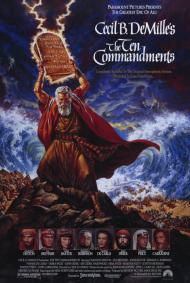



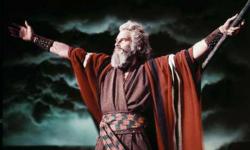
The Ten Commandments is probably the most famous and popular of all the many Biblical movie epics that were made during the nineteen-fifties and nineteen-sixties. Old-time director Cecil B. DeMille was so enamored of the story of Moses that he made the movie twice. The first time was a silent movie made way back in 1923. This version would be his last, and most famous, motion picture.
DeMille created both a timeless classic filled with pageantry, spectacle and a cast of thousands as well as a laughable campfest. It all depends on your point of view. At any rate, although it is certainly meant to carry an aura of reverence, it definitely comes across as a Hollywood interpretation of this most famous story from the Old Testament. What makes it work is the utter seriousness with which the actors deliver their stilted dialogue and the sheer massive scale of it all. And to be honest, the special effects have held up quite well over the decades. Only a handful of movies made before 1960 still get primetime network presentations and The Ten Commandments is one of them.
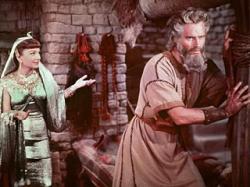
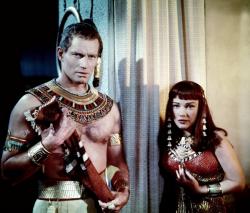
Charlton Heston has received plenty of ridicule over the years for his holier-than-thou performance. I say let's cut the guy some slack. He was playing Moses after all. Yul Brynner and Anne Baxter give the two campiest performances. As Rameses he stomps around with a perpetual scowl on his face and as Nefretiri she delivers every line with such showy melodrama that it is as if Norma Desmond were playing the part.
This movie is filled with iconic moments. There is the burning bush, the amazing shot of the thousands of Hebrews setting out for freedom, the debauchery in the desert when Moses goes up to receive the Ten Commandments, and of course the parting of the Red Sea. All of this is underscored by the mellifluous voice of the director himself as narrator.
Cecil B. DeMille directed the very first feature-length movie ever made in Hollywood. It was called The Squaw Man and was released in 1914. Forty-two years later he was still at it, having seen such technical advances as sound, Technicolor and wide-screen and having conquered them all, while still maintaining a silent movie director's visual eye, in this quintessential epic motion picture.