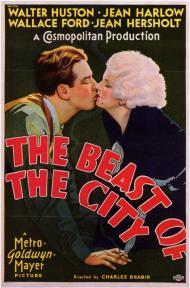



The Beast of the City was another attempt by MGM to capitalize on the gangster film craze that was doing so well over at the Warner Bros. Studio. The gimmick of this film being that the point of view would be from the police rather than from the gangsters. Although the end result is fairly entertaining and almost surprisingly violent, MGM head Louis B. Mayer reportedly didn't feel it fit the MGM image and put it in theaters only as the second-bill of double features.
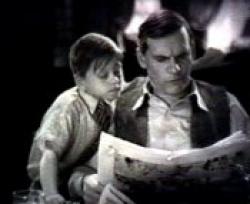
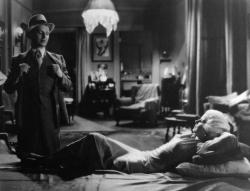
Walter Huston stars as Jim Fitzpatrick, a police detective frustrated by the rampant organized crime in his city, lead by bootlegger Sam Belmonte (Jean Hersholt). Fitzpatrick is an outspoken cop and a little hotheaded. He's also a family man, with his youngest son played by a very young Mickey Rooney. Living with him and his family is his younger brother Ed (Wallace Ford). Ed has a wild side and he likes the ladies. While Jim moves up the ladder in his quest to bring Belmonte down, Ed finds himself on the wrong side of the law when he takes some kickback from Belmonte so that Ed can keep his girl Daisy (Harlow) in the luxury to which she has become accustomed. It all leads up to a final shootout between the cops and the mobsters in a scene of carnage that leaves the screen filled with corpses.
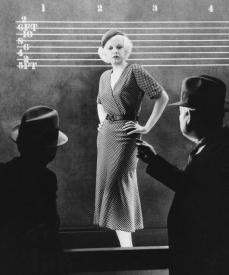
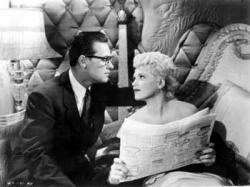
Although the movie as a whole is entertaining, it is Harlow, as she so often did, who steals the movie in just a couple of scenes, with one of them being a true classic. She plays Daisy, a real gangster's moll. She hangs on around Belmonte, presumably living off of her body. When Ed trails her back to her apartment one day, purportedly to find out info about her boss, but in reality because he can't resist, she seduces him easily, using her body and her natural talents in a way that would never have been allowed after the Production Code became enforced.
This seduction is the highlight of the film. She begins by draping her body, in a form fitting dress, across the sofa as if offering herself to him. She soon gets him drunk on beer and begins to dance for him. The dialogue is equally spark generating. When he grabs her arm at one point, she tells him that it hurts and he says, "And you don't like to be hurt, do you?", to which she replies with sex dripping from voice, "Oh, I don't know. Kind of fun sometimes if it's done in the right spirit."
It is Harlow who instigates the film's climax when she later manages to convince Ed to rob some money that he's meant to be guarding. When Jim, who's now the Police Commissioner, learns of this, it sets him on a violent collision course with the mob. The final scene is a doozy. Not much blood, but plenty of bodies.
One thing that can be said of these early talkies is that they didn't waste much time. This one clocks in at less than 90 minutes, but it manages to pack in a great deal of story and characterization. Modern filmmakers could learn a lot from those of yesteryear.
Louis B. Mayer may not have been proud of the finished film, but fans of Hollywood films of the 1930s, and Pre-Code films in particular, will find plenty to enjoy, especially in Harlow's performance.