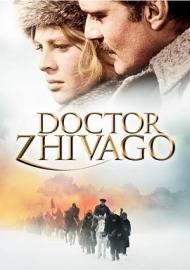



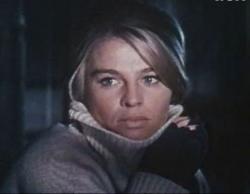
Having recently watch, reviewed and thoroughly enjoyed Bridge on the River Kwai and Lawrence of Arabia, I decided to complete David Lean's film trilogy of man's struggle during wartime. Doctor Zhivago is bigger in scope than its two predecessors, covering many years. As with the other films, the setting is integral to the story. The biggest difference being that this is a love story with a female lead as well as a male one.
Set during World War I and the Russian Revolution, Doctor Zhivago tells of the romantic relationship between the married Yuri Zhivago and the married Lara. Doctor/poet Yuri first sees Lara when he is called to help his mentor revive Lara's mother after a suicide attempt. He again sees her after she shoots a man at a party who had just raped her. They officially meet during the war with Lara acting as Yuri's nurse, but their relationship remains professional.
Yuri returns to his son and wife,Tonya. Lara is meanwhile married to Pasha. A man with far more political passion than romantic. Yuri relocates his family by journeying on a train that seems like one step up from the trains used to deliver Jews to Auschwitz. At a stop, Yuri walks through the woods and comes upon a political train with soldiers commanded by Pasha. Yuri learns that Pasha has not seen Lara since the war.
Yuri and his family start a new life in the country with a big old house and a garden. They do the very un-socialist thing of working hard to benefit themselves and not rely on the government. Seasons change and Yuri and Lara meet again. She thought her husband was killed in the war, while Yuri tells her of their meeting. Yuri and Lara fall in love and begin an affair. Yuri starts to live a double life. One in the country with his pregnant wife and son and the other in the city with Lara and her daughter.
The world intervenes when Yuri is abducted by partisans and forced to be a doctor for their troops. Again, time passes with Yuri caught in a war he wants no part of. He is dragged behind an army cleaning up the wounded after every battle. Eventually he deserts and returns, not to his wife but Lara, who tells him his family has returned to Moscow.
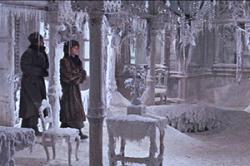
Yuri takes Lara and her daughter to his deserted, frozen country home. This is my favorite part. Yuri starts writing poetry again. The best scene is when Yuri is up late at night writing and Lara walks in complaining that there are wolfs outside howling. He assures her and they kiss. It is a beautifully symbolic moment of these two people living in a cold world as dangers lurks just outside.
As romantic as this movie tries to be, I never found myself caught up in their love. Yuri is a bastard. He has an affair on his wife and two children without a care as to how it affects them. Sure, Julie Christie is as stunning as can possibly be, but that does not justify his moral flaws. You may argue that he is hopelessly in love with Lara, but the movie never says why.
Alec Guinness narrates the story as Yuri's half brother Yevgraf, a career soldier in the Soviet Army. The film starts with him meeting with a girl he thinks may be Lara's and Yuri's daughter. The film ends with him talking to her. It tries to create a bittersweet ending but I found very little in this story to be satisfying.
Doctor Zhivago was a huge success, both financially and critically. It was nominated for a Best Picture and Director Academy Award but lost both to The Sound of Music. One award that it won and deserved was that of Best Cinematography. Like his previous work on Lawrence of Arabia, Freddie Young proved a great asset to the look of a film. The look of a film is however, not enough to make up for an over rated love story