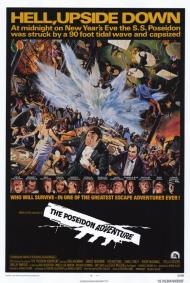



It's funny how movie genres go in cycles. Screwball comedies were popular in the 1930s, Westerns were the rage of the 1950s, and these days if you throw popcorn at a theater screen, the odds are you'll hit a superhero movie. In the early 1970s, before Star Wars would spark the Sci-Fi genre boom, it was the disaster movie that ruled the box office.
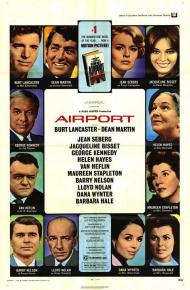
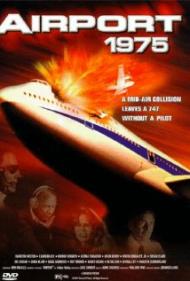
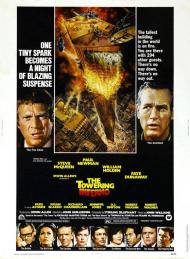
Although it would continue for several more years, 1974 was perhaps the zenith of the trend with the triple whammy release of The Towering Inferno, Airport 1975 (the first sequel to the movie that started the trend) and Earthquake. All three were huge box office hits and The Towering Inferno and Earthquake were both nominated for multiple Academy Awards.
While most disaster movies keep the action in one confined location like an airplane, a skyscraper, or a luxury liner, Earthquake expanded the concept to include an entire city. This wasn't a brand new concept of course, Clark Gable and Spencer Tracy dealt with an earthquake way back in 1936's San Francisco and there were several silent movies even earlier that also featured tremblers. It was, however, the first big budget movie of the modern era to explore the subject.
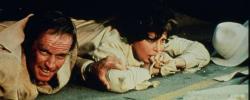
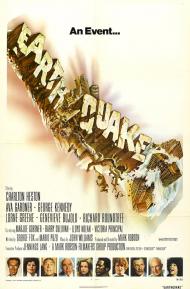
If you're familiar with disaster movies then you'll already know how this one works. A group of recognizable stars are introduced, headlined by Charlton Heston, George Kennedy, Lorne Greene, Richard Roundtree, an old Ava Gardner and a young Victoria Principal. We learn just enough about their characters to make them human and then disaster strikes. In this case it's the BIG one hitting Los Angeles. Following the disaster we then watch the stars try to cope and survive.
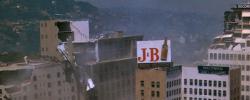
Of course, it's not just the familiar faces that are the stars. The disaster itself also takes center stage and it is fairly impressive, especially for the time, being filmed long before CGI was an acronym that meant anything to anyone. Despite the obvious use of models and the occasional cement block that's clearly made out of Styrofoam, the destruction of Los Angeles is well filmed, even if it is a bit over-the-top. This isn't just the biggest earthquake to hit the city, but also the longest. Even if you assume that the events of the earthquake are meant to be happening simultaneously, it still must be the longest quake on record, given that they normally only last for less than a minute.
The biggest problem with the movie is Charlton Heston's character. Technically he's the lead, but he's not a very sympathetic one. The script by Mario Puzo provided plenty of backstory, but much of it was edited out after he left the project to work on The Godfather Part II. Heston's character is married to Ava Gardner and as the movie opens they're arguing and she even fakes a suicide attempt. Reportedly, we learned more about their marital problems in the earlier drafts of the script, including the fact that she had an abortion against his wishes (an idea Puzo would put into The Godfather Part II). Without that crucial bit of information, you're just left with the idea that they're angry with each other, but given that Heston is having an affair, it's not surprising that his wife would be angry.
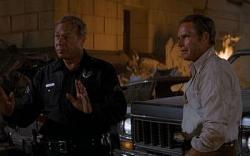
George Kennedy's character is more sympathetic as the LAPD officer who gets suspended from the force before the earthquake hits. A young Victoria Principal shows off her budding talents in a tight t-shirt and some massive 1970s hair. Richard Roundtree provides some comic relief as a motorcycle stunt rider. He gets the movie's funniest line when he says after the quake strikes, "I hope to God Evel Knievel was in town today." The other notable character is the very sexy Genevieve Bujold, who plays a young mother, aspiring actress and Heston's mistress.
Earthquake isn't the greatest disaster movie of the period, but it is still a fairly entertaining one. The spectacle remains impressive even if some of the dated aspects are unintentionally funny now. Camp mixed with catastrophe can be entertaining as many movies of the period proved.