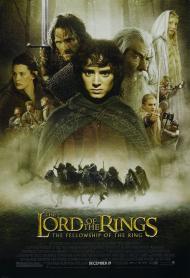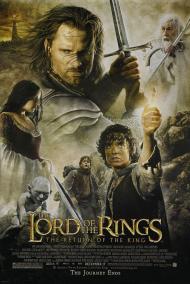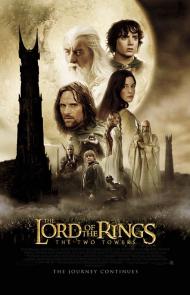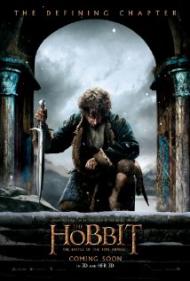



By now, the strengths and the weaknesses of this series are well established. The acting, the action, and the special effects are very well done, but the story has been stretched and bloated in an attempt to turn it into an epic on par with The Lord of the Rings. This final installment is no exception. Despite coming in at a brisk 2 hours and 24 minutes (the shortest of any of Peter Jackson's Middle Earth films), it still features plenty of filler. Most of it in the form of the titular battle that seems to go on and on and on.
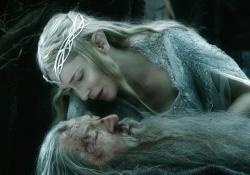
In case you've forgotten, and I know I had, the second film ended with Thorin, Bilbo and assorted dwarves, wandering the treasure trove under the mountain while Smaug the dragon was flying down to attack Laketown, and while Gandalf was being held as a prisoner of the Necromancer. These leftover cliffhangers are quickly resolved in a couple of the film's most exciting scenes. Gandalf's escape, with the help of some familiar faces, presages the events in the Lord of the Rings, and is particularly well done despite being completely superfluous to the main story. Smaug's fate is so rapidly sealed that it almost feels silly that they didn't wrap up his part of the story in the second film. In any case, once these preliminary events are out of the way, the film focuses on the gathering forces of men, elves, dwarves and orcs around the mountain all eager to collect their share of Smaug's treasure, thus leading to the aforementioned battle.
The battle scenes are well done, but given they take up over an hour of the film there's more than enough of them to go around. And although they're technically well done, only a couple of moments in the battle carry any emotional weight. For the most part you're just watching computer animation of orc armies battling equally animated elves and dwarves. It's only when the battles breakout into individual fights that they become truly interesting, but even those fights go on too long. There's a terrific buildup to the big showdown between Thorin and the leader of the orcs and then the fight itself goes on and on and on. And the same is true of Legolos's battle with another orc. Even the emotion generated by these fights though is less than the swelling music would have you believe was intended.
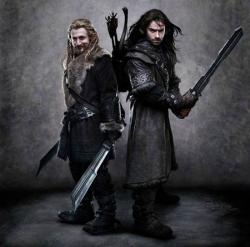
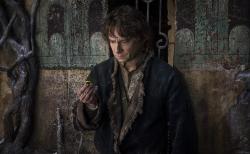
The cast acquits itself well. Ian McKellan has made the part of Gandalf his own and is now inseparable from the character. Richard Armitage does excellent work as the gold crazed Thorin. Martin Freeman makes a fine Bilbo, but as with the first two films, he is no longer the star of this story, merely one of a cast of dozens. Although there have been fan grumblings about the addition of Evangeline Lilly as the elf Tauriel and her love affair with Kili the dwarf, their moments together are some of the few that generate real emotions. I certainly enjoyed their scenes together more than I did the supposed comic relief provided by Ryan Gage as Alfrid.
Part of the problem with this prequel series compared to the original Lord of the Rings films is that the series lacks a clear goal. In the first three films, the plot was simple. Destroy the ring. All of the films were leading up to that one moment. Here though, the story meanders and flounders. First it's about getting to the mountain, then defeating the dragon, then fighting over the gold. On top of those things, Jackson has thrown in all sorts of extraneous elements related to the coming war with Sauron, which complicates things even further. Maybe he should have turned it into a big budget TV series for HBO, then he would have had years to include as much background as he wanted.
All three of the Hobbit films are enjoyable despite their flaws. However, the decision to expand the story and give it an epic scope has forever tainted them. Somewhere within these three movies there might be a masterpiece retelling of the novel, but you'd need to edit out close to 4 hours worth of material to get to it.