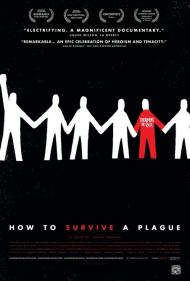




How to Survive a Plague is the Oscar nominated documentary about AIDS activism from the mid-1980s to the mid-1990s, focusing on the leaders of ACT UP and Tag. It uses videotape and newscasts from the times as well as interviews with AIDS survivors today who look back and comment on the times. It's an interesting film and at times an emotional one, but for a documentary it is surprisingly light on factual details.
The film begins in New York City in the mid-80s when the AIDS epidemic was really beginning to rage. The group ACT-UP was formed in 1987 with the intention of bringing about legislation, medical research and treatment that would help find a cure for AIDS. Most of the film is homemade video tape by members of the group and the quality varies. We sit in on their meetings, which are often argumentative and we follow them out onto their many protests and demonstrations. And in more personal moments, we see video tape of some of the members at home. The story continues in this way until the mid-1990s when drugs were developed that made the disease manageable.
At the end of the film, while mourning the loss of friends, the film also takes a moment to pat itself on the back, but just what this group actually did to contribute to the cure is never laid out in detail. Through their demonstrations they may have brought about social change, moving homosexuality further out of the closet than it was before and raising awareness of AIDS, but the film's claim that the drugs wouldn't have been developed without them seems dubious at best.
The film also shows political bias, casting Republicans, particularly George Bush Sr. and Jesse Helms, as villains. While it's true that Jesse Helms was no friend to gay people, his inclusion in the film via news footage seems purely inserted to show the government in a bad light and putting a giant condom over Helms home by ACT UP might have been amusing, but it hardly furthered the cure. Bush, meanwhile, is shown golfing while people are dying of AIDS and he is constantly referred to as a murderer because of his perceived refusal to put enough money into AIDS research, at least by ACT UP's standards. While it's very understandable that people who are dying would be angry and would want to blame someone or something for their situation, to accuse Bush or any politician of being the cause of those deaths, seems extreme.
Included in the interviewees are chemists from Merck, the drug company who first developed effective AIDS drugs. While one of them speaks of being inspired by AIDS sufferers, the film does little else to suggest that these drugs wouldn't have been developed even without ACT UP. In fact, the group's insistence on quick drug approval by the FDA is even criticized when it lead to AZT being released before it was proven that it was ineffective.
More interesting than the back patting is watching the strong and often dramatic personalities of the group bicker and argue amongst themselves. These arguments would eventually lead to a split in the group when many of the leaders broke away to form Tag, a group that focused less on demonstrations against drug companies and the government, and focused more on working with those groups. ACT UP would continue as a grassroots movement with its power in being able to put bodies on the street where needed.
The subject matter of How to Survive a Plague is ripe for a documentary. It's filled with characters and drama. I would have preferred a more detached look at it though. One made from the outside that looked objectively at the situation and the history of ACT UP and one that laid out the facts of exactly what the group accomplished.