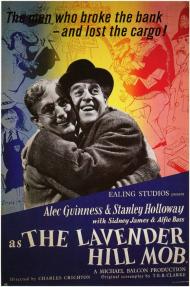



Post World War II Britain was a very different place than postwar America. While America was luxuriating in an affluence that has rarely been rivaled, Great Britain faced a grim few years of near bankruptcy. Food rationing, begun in 1940, didn't end until 1954. As is often the case, out of hardship came art. In this case, it was the uniquely British Ealing comedies. And of all the films Ealing Studios produced during its heyday from 1948 to 1955, The Lavender Hill Mob is one of the best remembered.
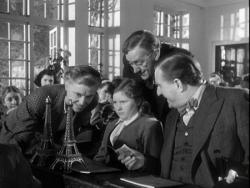
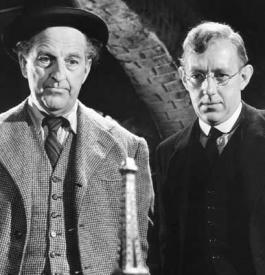
Alec Guinness stars as Henry, a mild mannered bank clerk. A part of his duties includes overseeing a weekly delivery of gold bars. His superiors see him as a dependable, but unimaginative little fellow. What they don't know is that for years he has been dreaming of finding a way to rob one of the shipments for himself. He knows how to get the gold, but what stops him is that he doesn't know of a way to smuggle it out of the country so that it can be sold. Fortune smiles on him when he befriends a man who deals in knick-knacks who also owns a factory where gold could be melted down and hidden inside souvenirs. The gold could then be sent past customs, safely disguised as statues of the Eiffel Tower. Naturally enough, things don't go quite as smoothly as planned.
At barely an hour and 15 minutes, this is a movie that just flies by. There's plenty of laughs to be found and even a bit of comic action involving an extended chase scene. In one of the funniest sequences, Henry and his partner Alfred try to chase down six school girls who have each purchased one of the golden towers that were mistakenly put up for sale. After a giddy run down the spiral staircase of the Eiffel Tower, the pair chase the girls all the way to the port of Calais. Before they can follow the girl's onto their ship however, they must deal with the bureaucracy of customs, border control and the ticket office, all of which they patiently deal with in a very English manner, even as they frantically hurry to catch the girls.
Along with the humor and adventure, the movie is also a reflection of the time period. The class structure, which is hidden below the surface of modern Britain, is on full display here. Note the deference Henry shows to his superiors at the bank, not even looking them in the eye, but keeping his gaze cast downwards in their presence. He is as far below them as the two professional criminals he and Alfred hire to assist them are below him. Those two are cheery cockneys who are quite happy to let Henry and Alfred sell the gold, trusting them to handle the money and thinking side of things.
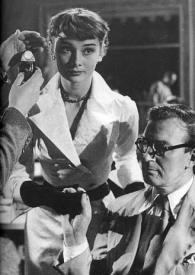
Despite being quite English, the film did receive some attention in America. It won the Best Screenplay Oscar and Guiness received a much deserved Best Actor nomination. It's a light role, but he plays it to perfection. Another actor of note appearing in the film is a very young Audrey Hepburn as an extra in the opening scene.
Released 60 years ago, this film is timeless and has left a lasting legacy. John Cleese, among others, was clearly influenced by it when he made A Fish Called Wanda. He even chose to get The Lavender Hill Mob's director, Charles Crichton to direct Wanda, despite Crichton being in his late 70s at the time.
Although just a light-hearted little comedy, The Lavender Hill Mob is in many ways a work of art. Its escapist storyline must have appealed particularly to the cash strapped English audiences at the time of its release, but it is still equally appealing today.