


For a brief time in the late 1940s and into the 1950s, the subject of silent film was in vogue. This was most notable in such mega hits as Sunset Blvd (1950) and Singin' in the Rain (1952). Some silent film stars found themselves starring in films as well. Besides Gloria Swanson in Sunset Blvd, there was Harold Lloyd in The Sin of Harold Diddlebock (1947), Lillian Gish in The Night of the Hunter (1955) and Mae Marsh in a small role in The Searchers (1956).
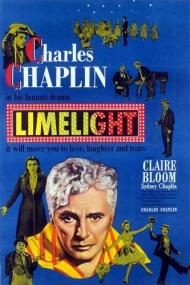
Donald O’Connor, who played a supporting role in Singin' in the Rain, portrayed Buster Keaton in the completely inaccurate biopic The Buster Keaton Story (1957). Buster Keaton himself appeared in small roles in both Sunset Blvd and Limelight, starring the great Charles Chaplin.
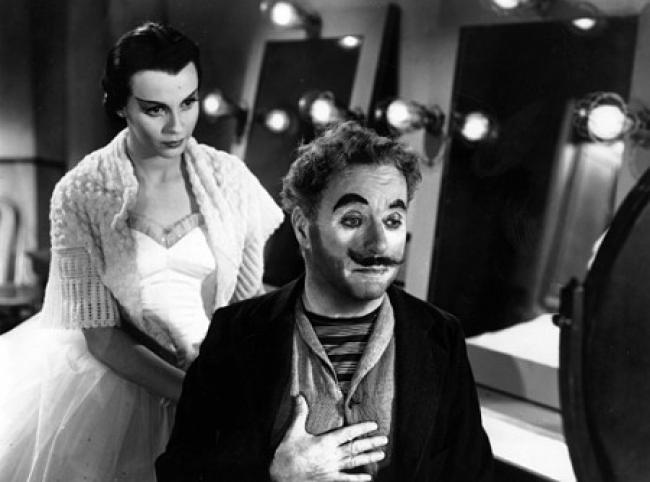
Limelight was Chaplin’s last American produced film. He wrote, directed, starred and composed the soundtrack for which he won his only Academy Award. It was to be his swan song. He would only star in one other film besides appearing in a cameo role in his final film A Countess from Hong Kong (1967). Limelight did not get the reception Chaplin hoped. At this point he was being black balled for supposedly being a communist sympathizer and it received more press than this film.
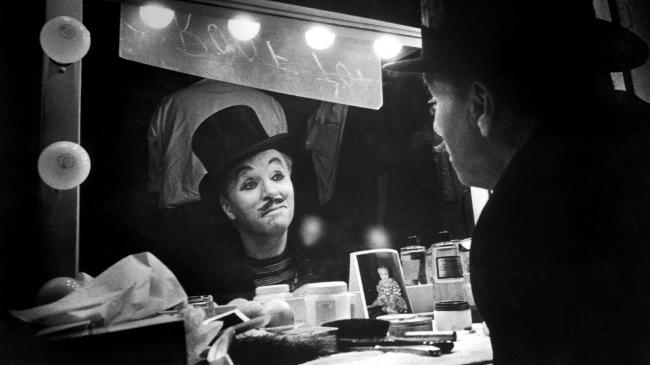
Well into his sixties, Chaplin plays an aging vaudevillian clown named Calvero. The film starts in 1914, which was the year Chaplin made his film debut. The film opens with him arriving home drunk as a skunk, much as Chaplin had in many silent films. The children on the street who briefly talk to him are Chaplin’s real life children. He enters his apartment building and smells gas coming from an apartment rented by a ballet dancer, Thereza. He saves her and spends a great deal of time nursing her back to health as well as giving her motivational speeches. In between we have shots of Chaplin performing his clown act on stage.
Calvero has long seen his heyday pass. He is depressed and lonely. After a particularly bad performance in which the audience walks out on him, it becomes Thereza's turn to give him a pep talk. Despite their obvious age difference, they become a couple. Thereza returns to the stage and catches the eye of a young piano player whom she used to know.
Although a drama, Chaplin incorporates some humor. He does a pantomime flea circus act that is not as funny as he might think. With a touch of irony, the funniest moments this silent clown creates are due to his dialogue. At one point Chaplin recites an ode to worms, when a girl interrupts him and says, “A worm can’t smile.” Chaplin comes back with, “How do you know? Did you ever appeal to its sense of humor?” One song that Chaplin sings has an interesting line. "While searching through my underwear, a thought occurred to me. I'm tired of training elephants so why not train a flea?" The question is, does the content of his underwear remind him of an elephant or a flea?
The pace is slow and we see far too much of a ballet that Thereza and Calvero appear in. It drags on even when neither is on stage. The film reaches a dramatic crescendo when Thereza suddenly cries to Calvero back stage that her legs do not work and she cannot go on. Calvero then slaps her, forcing her to move, proving that her legs do in fact work fine. She then goes on stage and we must see yet more of the ballet.
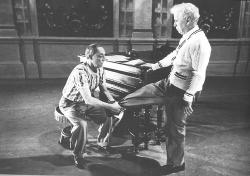
As a huge Buster Keaton fan, I anxiously waited for him to appear on screen. Although billed fourth, he only has a couple of scenes that he shares with Chaplin near the end. His first line, “I never thought we’d come to this.” is directed to Chaplin as they both apply makeup before going on stage. A bit later they do a comic bit on stage that shows both still had their comic knack. The scene is the highlight of the movie as well as a silent film buff's wet dream.
Although it starts slow and often moves at a slow pace, Limelight ends on a brilliant note both comically and dramatically. Limelight is not the most entertaining film but the nostalgia factor is through the roof. It is easy to draw comparisons between Calvero, the aging clown, and Chaplin. The single best moment in the film is when Chaplin says, “There's something about working the streets I like. It's the tramp in me I suppose.”