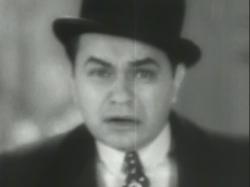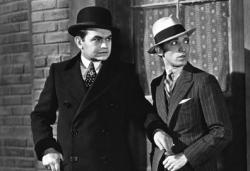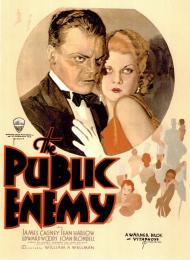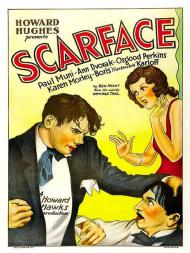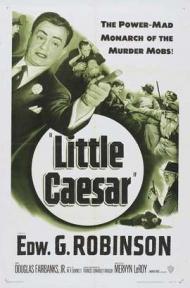



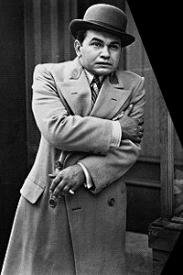
Little Caesar tells the story of the meteoric rise and fall of Caesar Enrico Bandello, or Rico as he is known to his underworld cronies. This is the film that launched the gangster picture craze of the early 1930’s and made Edward G. Robinson an unlikely movie star. It predates The Public Enemy and Scarface and is a seminal example of the genre with many of the trappings that would become clichés in later gangster pictures.
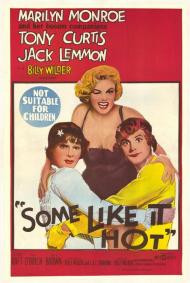
Here are a few examples. There is a scene at a funeral where several wise-guys callously discuss the deceased, a fellow gang member who turned canary and was gunned down on the street before he could sing. There is a scene featuring a gangland banquet in a fancy hotel ballroom and there is the hard-boiled copper that keeps showing up to make smart-ass threatening statements to the mobsters (clearly this movie influenced Billy Wilder’s gangster farce Some Like it Hot). And there is the final dramatic death scene of the anti-hero.
When the movie begins Rico and his pal Joe (Douglas Fairbanks Jr. who was given the part over a young actor named Clark Gable because the producers felt Gable’s ears were too big) move to an unnamed big city in America to follow their dreams. Joe wants to be a dancer while Rico has his sights set on conquering the underworld.
On New Year’s Eve Rico pulls a big job and winds up murdering the Crime Commissioner with Joe as a witness. Suddenly Rico is the new player in town. The story then follows Rico’s (later given the moniker Little Caesar) violent rise to the very top of the racketeering business. Of course his fall comes just as quickly. After just over an hour and fifteen minutes he is gunned down behind that billboard and utters his famous last words, “Mother of mercy, is this the end of Rico?”
One interesting aspect of Little Caesar is its lack of female characters. While Joe has a girlfriend played by Glenda Farrell, Rico seems to have absolutely no interest in the opposite sex. He does have a very loyal henchman with whom he is quite affectionate but his true love (other than power) seems to be Joe. Even when Joe is about to run out on him the normally ruthless Rico cannot bring himself to shoot his pal.
Mervyn LeRoy keeps the movie clipping along although the violence is neither as plentiful nor as graphic as in later gangster pictures. Edward G. Robinson struts through the movie like a Prohibition era Napoleon. He has charisma to spare and created a truly iconic character in Enrico Bandello. Whenever he’s on the screen it’s impossible to take your eyes off him.
Unfortunately the rest of the cast is not up to snuff. Fairbanks is quite bland and many of the fellow gangsters give amateurish and/or melodramatic performances. In the final analysis none of that matters however. I cannot in good conscience give this historically important picture less than 4 stars.