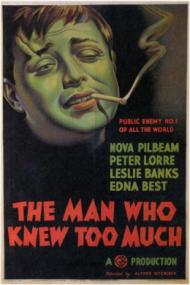



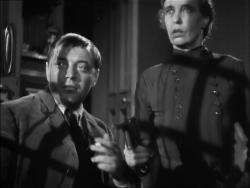
What I think makes Hitchcock such a brilliant director is the fact that his movies all contain elements of 'Art' and yet you get the feeling, after watching them, that he didn't make them for art's sake, but for no other reason than it was the best way to tell a really great story. The Man Who Knew Too Much is a perfect example of this. By 1934, the year The Man Who Knew Too Much was released, Hitchcock had already been directing movies for more than a decade and many of his classic elements were in place. The densely woven intrigue, the lighting and surreal camera angles, the moments of shock. And he uses symbolism and foreshadowing in the best way, to advance the plot or deepen character development, not to show off.
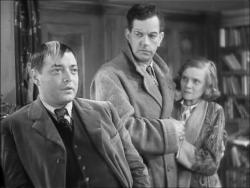
Bob and Jill Lawrence find themselves caught up in an international plot to assassinate a foreign dignitary while on winter sports holiday in the Swiss mountains. When Jill innocently dances with a Frenchman, a gunshot rings out and he slumps to the floor. Before dying he tells her to get a 'brush' from his room and to immediately contact the British Consul. They are soon in over their heads, however, as teenaged daughter Betty is kidnapped and, once back in London, the intrigue and danger continue to grow.
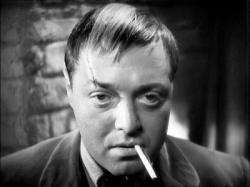
Like any good Hitchcock movie you never really know what to expect next. This movie is full of surprises, whether it is the scene at a dingy dentist's office or the chair fight at the sun-worshipping religious sect's meeting (of course they are just a cover for the terrorist organization). And the bad guys are perfectly creepy. Peter Lorre is his usual heinous and deranged self, leading an army of sycophants and assassins.
The gun battle at the movie's climax is a great scene. Hitchcock uses many different camera angles and quick edits to enhance the violence of the moment. The final scene even manages to be feminist long before the term was coined and symbolically it brings the story full circle. Hitchcock was so enamored of the script that he remade the movie twenty-two years later with James Stewart and Doris Day in the lead roles.