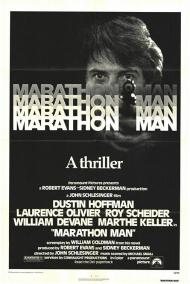



Marathon Man is one of those movies that's considered to be a classic, but is actually rather overrated. It has a couple of classic scenes, a famous line, and features the match-up of veteran actor Laurence Olivier and method actor Dustin Hoffman, which lead to one of the most famous acting anecdotes of all time. It's also rather slow paced, with weak motivation and a disappointing ending.
The famous anecdote, which Hoffman has disputed, supposedly happened after the famously method Hoffman stayed awake for 48 hours in real life because in the scene he was going to play, he was supposed to have gone without sleep for that long. When he showed up for work all bedraggled and worn out, Olivier supposedly quipped, “My dear boy, you look awful. Why don't you just try acting? It's much simpler.” Perhaps ironically, it was Olivier who was nominated for the Oscar for his part, while Hoffman was ignored.
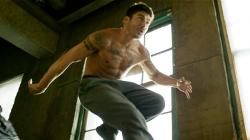
This is one of those movies where the plot seems more complicated than it really is. Olivier plays Szell, an old Nazi living in Argentina. The character is based on the infamous Nazi, Josef Mengele. He's brought out of hiding when his brother is killed in a car accident in New York City. For reasons never explained, his brother was safeguarding a hoard of diamonds in a safety deposit box for him. His attempt to retrieve his treasure is complicated by an American agent played by Roy Scheider, who may or may not be working with Szell. Scheider plays Hoffman's older brother, which brings the evil Nazi and his cohorts into contact with Hoffman's PHD student character, nicknamed Babe, who is also a runner, hence the title.
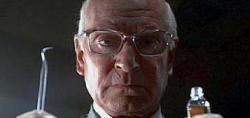
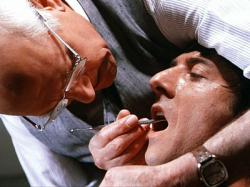
The line, “Is it safe?”, which Szell repeatedly asks Babe while torturing him was ranked #70 by the AFI on their “100 Years...100 Movie Quotes” list. The scene is quite tense and the torture method is simple, but effective. Szell uses a dental drill without anesthetic in a way that will make you squirm in your seat and dread your next dentist visit. It's a scene that deserves to be famous, but once you learn all of the movie's secrets, you'll be wondering as much as Babe was, just what the hell Szell was asking about. What's the “it”, he's referring to? If it's the diamonds, shouldn't he be asking, “Are they safe?” And instead of asking about them, why isn't he just going to get them?
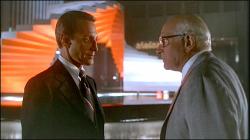
Later, near the film's finale, the other famous scene takes place. Szell is walking through the Diamond District in New York City when he is recognized by an old Jewish woman who begins yelling his name. Szell tries to hurry through the crowd as people begin to wonder what she's yelling about. It's probably the film's best scene.
Director Schlesinger makes good use of gritty, 1970s New York City, including many scenes around the reservoir where Babe does his running and on the Brooklyn Bridge during an exciting chase. This was the first movie to be released that made use of the Steadicam and it's most noticeable during the running scenes.
The marathon in the title could also be in reference to the running time. At over two hours there's plenty of room for trimming, particularly in the first half, which is quite slow and plodding. The other problem with the first half is that it tries so hard to make the film seem like a mystery, when it's all really very simple, that it wastes time with red herrings.
With such a great reputation, I'm sure plenty of people will take umbrage with my opinion of this film, but watched objectively today, with no knowledge of its “classic” status and perhaps you'll be more inclined to agree with me.