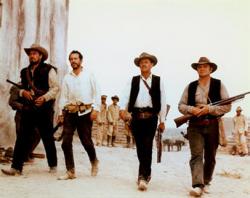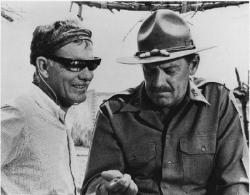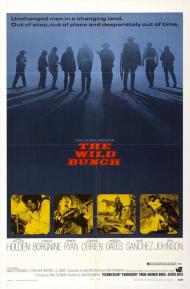



The Wild Bunch is a groundbreaking Western from director Sam Peckinpah in 1969. It tells the story of an aging gang of outlaws going for one last big score in 1913 along the Mexican/American border. In terms of graphic violence and the amount of blood that spurts across the screen, Peckinpah took up where Bonnie & Clyde had left off. Its intricate multi-angle editing using slow motion photography was a revolutionary cinematic technique. In short, The Wild Bunch has become one of the most revered Westerns in the history of the genre.
It opens with a close-up image of two scorpions being devoured by thousands of ants as several young children watch with fascination. This is symbolic of all the carnage to come. The body count rises to well over a hundred by the time the end credits roll. It has been suggested that more blank rounds of ammunition were discharged in the making of this movie than live rounds were fired during the actual Mexican Revolution around which the story is set.
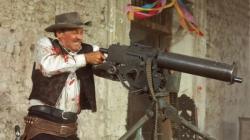
But it's more than just the sheer numbers that makes this movie so groundbreaking, it's the way Peckinpah filmed the gunfights that really changed cinema. The choreographed slow motion shots of blood spurting from bullet wounds is almost ballet-like in precision. With an average shot length of just three seconds the editing was also innovating. And Peckinpah did away with the generic gun shot sound that had previously been used in movies and made sure the different types of weapons fired each created their own unique report, as in real life. Its influence can be seen in literally hundreds of movies right up to the present day.
A haggard looking William Holden stars as Pike Bishop, the leader of his gang of outlaws. He is brilliant in the part. All his years of experience are written across his weather-beaten face. He's a bad guy but he's also noble. He gets the movie's most famous line when he stops a fight between two other members of his gang by telling them, “When you side with a man, you stay with him, and if you can't do that you're like some animal, you're finished!”
Robert Ryan and Ernest Borgnine head the cast of supporting players. Ryan plays a former member of the gang, released from a Yuma prison in order to lead a posse in tracking down his old partners in crime. Borgnine is William Holden's second in command. Their scene together around a campfire where they talk fatalistically about not having it end any other way reportedly left the director in tears, too moved to call out cut. The remainder of the cast (right down to the real life Mexican prostitutes) all give authentic turns. There isn't a false performance in the bunch.
The movie begins and ends with two incredible action sequences, each of which took several days to film. The first is where Pike's gang attempts to rob a railroad office of its gold but unknowingly walk into a trap. The final gun battle tops the opening one. It pits what's left of Pike's gang against hundreds of armed Mexican revolutionaries. It is so gloriously over the top yet so realistically filmed that more than 40 years later it has yet to be topped.
Sam Peckipah said his intent when making this movie was to show violence in all its bloody glory to counteract the sanitized, bloodless Westerns that seemed to glamorize shootouts. This was at the height of the Vietnam War and nightly newscasts were filled with dead bodies. He envisioned this use of hyper-violence to be a form of catharsis that would purge the audience of its taste for it. He later admitted to being wrong and that, on the contrary, audiences seemed to enjoy and even grow immune to, the rivers of blood spattering across the screen.
For better or worse The Wild Bunch changed cinema forever. There aren't too many movies you can honestly say that about. Peckinpah's direction is truly brilliant. It holds up as well today as the day it was released. A must see for casual movie lovers as well as serious students of film.