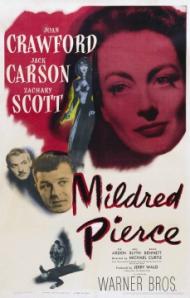



James M. Cain wrote three novels that were made into movies in the nineteen-forties and all three became classic entries in the film noir genre. In 1944 Billy Wilder made Double Indemnity, in 1946 John Garfield and Lana Turner steamed up the screen in The Postman Always Rings Twice and smack in between these two Michael Curtiz directed Joan Crawford in her Oscar-winning, come-back role in Mildred Pierce. Perhaps Mr. Cain should have been a screenwriter because these celebrated films are still revered today while the novels that inspired them are long since forgotten.
Mildred Pierce opens with a man being murdered. We hear several gunshots and as the man falls to the floor he murmurs, 'Mildred. Mildred.' From here the story moves to a police station where most of the main characters are introduced and - under interrogation - the long-suffering Mildred Pierce tells her story in flashback.
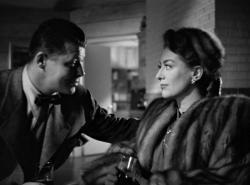
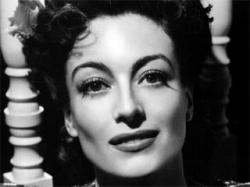
The details of this soap opera plot are pure Hollywoodland clichés. But that's only part of the fun. The lighting, the characters and the score by Max Steiner are all wonderful. And Joan Crawford proves that you can be a powerful and sexy screen presence even after the age of forty. Sure other women had played sexy roles at her age but what made this performance unique was the honesty with which her age is portrayed.
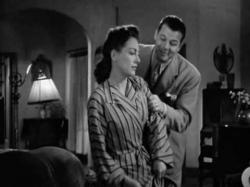
This movie is a showcase for its female stars. In addition to Crawford, Eve Arden, Ann Blyth, Jo Ann Marlowe and Butterfly McQueen all give inspired performances. Unfortunately the same cannot be said of the men in this picture. With the exception of the always-reliable Jack Carson, the performances of the male stars are weak and forgettable. Zachary Scott and Bruce Bennett both barely register on the screen and are forgotten the second they leave a shot. It's quite amazing that Mildred Pierce turned out as good as it did given this major flaw, still one can't help but wonder what this movie would have been like with Jimmy Stewart or Cary Grant in one of the main roles.
Mildred Pierce is a stylish murder mystery with a surprise ending. But more than that it is a story about a mother's sacrifices for an ungrateful daughter. It is also interesting today because it is a perfect time capsule of the birth of suburbia. This movie screams mid-forties from opening shot to closing credits.
The image of Joan Crawford doing her best martyred mother, gazing helplessly at her daughter and saying in that impossibly understanding voice, 'But Veda darling.' will stay with you long after the final shot.