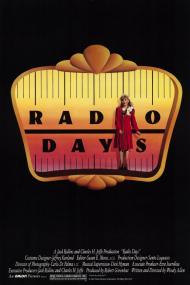



The nostalgia in Radio Days is palpable. This hilarious and touching look at a family in Far Rockaway, Brooklyn in the early 1940s as told through a series of radio stories is Woody Allen's most sentimental movie. It is also one of his most purely enjoyable. It is swiftly paced, moving from short vignette to short vignette with one main family as the thread holding it all together. This New York never really existed; it's a beautifully conjured dream of memory.
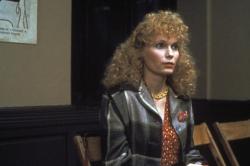
The cast does a brilliant job handling both the moments of high comedy as well as the subtler dramatic ones. Standouts are Julie Kavner as Mother, Michael Tucker as Father and the always-wonderful Dianne Wiest is Aunt Bea, hopelessly searching for Mr. Right. Mia Farrow gives a scene stealing turn as Sally White, dim-witted yet ambitious blonde who changes her ditzy gangster's moll accent into a cultured speaking voice. And in one of the funniest moments of the film she momentarily forgets herself when inviting a room full of society people up to the roof of a building on New Year's Eve. She also has the most memorable line when she innocently asks, "Who is Pearl Harbor anyway?"
Other funny bits include two burglars who answer the phone of the apartment they have just broken into and wind up being contestants on the Name That Tune radio program. Which brings up the importance of music in Radio Days. You may not remember all of the old hit parade songs heard in this film but they nonetheless create the perfect ambiance to the setting and stories being told. One example is when Aunt Bea's new boyfriend bursts into tears when a certain tune comes on the radio. He goes on to explain that it was he and his fiancée's song. His fiancée's name was Leonard and after an uncomfortable silence she responds with "It's a nice song".
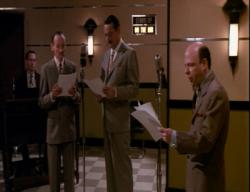
Then there is the scene where a neighbor goes crazy (to the tune of "Mairzy Doats") and runs out into the Brooklyn streets wearing only his undershirt and boxer shorts while brandishing a meat cleaver at passersby. Or the moment when we are shown that the heroic Masked Avenger is really some nebbishy looking schnook.
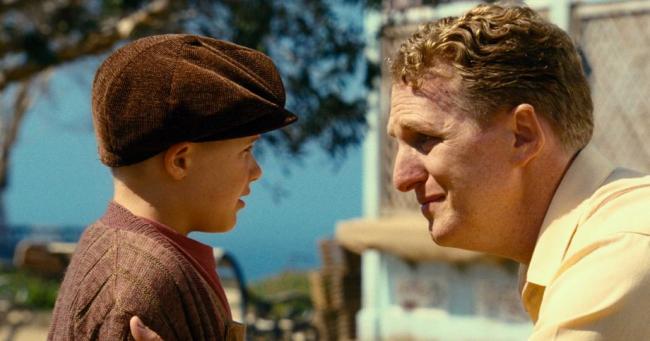
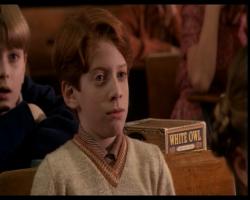
At the center of it all is the young Woody Allen character. The adult Allen, through voice-over narration, voices him for the most part. Two moments that stand out are when his family takes him to Radio City Music Hall for the first time and when he spots a German U-boat off the coast of Coney Island. He never tells anyone because no one would believe him, except for Biff Baxter.
This movie has more heart than we are used to seeing in Woody Allen movies and that, in my opinion, is what makes Radio Days so great.