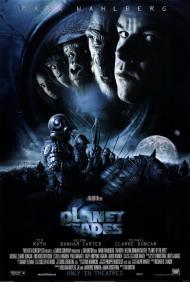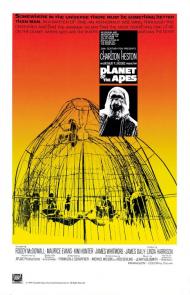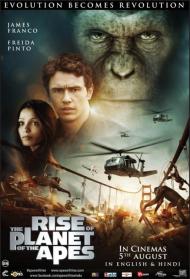



With so many remakes, reboots, reimaginations, sequels and prequels of movies from my childhood being made, I'm starting to feel old. I was a bit leery about yet another one, especially after Tim Burton's disappointing attempt to revive the Apes franchise in 2001. Turns out however that for once Hollywood got it right and managed to produce a reboot that honors the original movies while still putting a new and entertaining spin on the concept.
The story is set in modern times and most closely resembles the plot of 1972's Conquest of the Planet of the Apes in that it tells the origins of intelligent apes, but for different reasons than in that earlier film and is definitely not a direct remake, nor does it really fit in with the continuity of the earlier series.
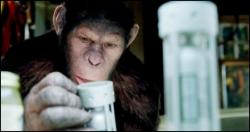
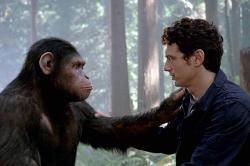
James Franco plays Will, a scientist working on a cure for Alzheimer's Disease. A goal motivated by concern for his father (John Lithgow), who is suffering from it. He develops a successful vaccine in the form of a virus that combats the disease that he tests on chimpanzees. When one of the tested chimpanzees becomes violent, the program is shut down, but Will discovers that the reason for her sudden rage was simply that she was protecting her new born chimp baby, whom Will adopts, naming him Caesar.
Caesar has picked up the virus from his mother and grows more intelligent as he grows up. Will is so encouraged by his aptitude that he begins using the virus on his father with great success. However, after a few years, his father's immune system begins to fight back and the effects of Alzheimer's return, forcing Will to work on a stronger version of the virus.
The action in the movie really picks up when Caesar attacks a neighbor to defend Will's father. Caesar is then sent to an animal shelter where he meets other apes for the first time and sees how his "people" are mistreated. He determines to find a way to improve their lot in life.
While it does take a while for the movie to really get going, I was never bored. Franco does a decent job, playing it straight and serious and Lithgow evokes empathy. It is Andy Serkis though who is the real star of the film, as the motion captured Caesar. Serkis is the modern day Lon Chaney. Thanks to the magic of computers, he's the new man with a thousand faces and the go-to-guy when it comes to humanizing computer generated characters.
The filmmakers have cleverly included several references to the original films. One character is watching a Charlton Heston film on television. There's a recurring news story in the background involving a spaceship named Icarus, which was the name of the ship that crashed on the Planet of the Apes in the original. The first chimp to be tested on is nicknamed Bright Eyes, which was the nickname given to Taylor in the original. And there's a direct nod to the original's most famous and most quoted line in a scene that mirrors the first time the apes hear Taylor speak. What's great is that you don't have to recognize these nods, but they make nice Easter Eggs for those in the know.
The ending sets itself up for a sequel and I'll definitely be in line to see it when it happens.