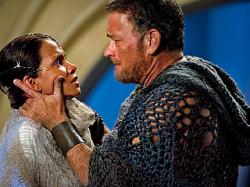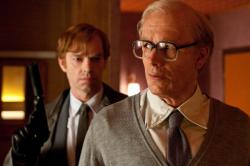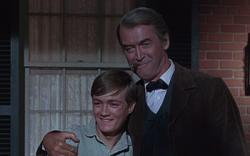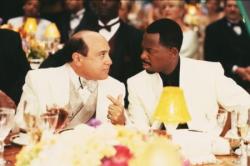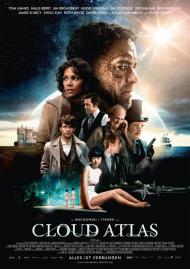



Cloud Atlas is as ambitious in concept as it is sprawling in scope. Taken from the 2004 novel of the same name by British author David Mitchell it spans numerous centuries and occupies more than one planet. Its main themes are reincarnation and the effects of karma on future lives. Six different stories are interwoven with the same ensemble cast playing a variety of roles. Each of the main character's lives from each historical epoch is read about or somehow observed by a character in a future existence. Cloud Atlas credits three different directors, Tom Tykwer, and Lana and Andy Wachowski.
The six stories (in chronological order) are as follows...
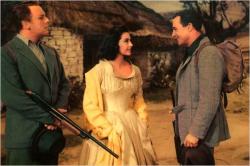
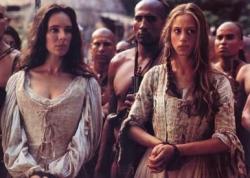
In 1849 a young man from America named Adam Ewing gets shipwrecked in the Chatham Islands. On the ship returning to America he saves the life of a slave that has snuck aboard and he's being treated by a doctor for some mysterious island malady.
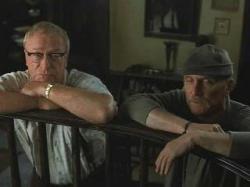
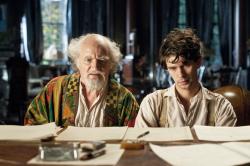
In 1936 in Belgium, a young Englishman named Robert Frobisher works for a great composer (see photo). He reads Adam Ewing's published memoirs.
In 1973 in San Francisco, a journalist named Luisa Rey investigates the safety of a nuclear power plant. Luisa meets an elderly scientist who was once Robert's lover. She reads some old love letters the two men wrote to each other.
In 2012 England, a book publisher receives Luisa's story in the mail in the form of a thriller-type novel. When he pisses off some gangsters he winds up hiding in an old folks home where he is held captive against his will (this is the one story out of the six that is played for laughs).
In 2144 a cloned woman called Sonmi-451 joins a rebellion. Her connection to the previous character is that she watches a movie based on his daring escape from the nursing home.
The final story takes place 104 years “after the fall” of civilization on a tropical island. The main characters in this story watch a hologram image of Sonmi-451 who has since become a famous martyred figure.
Although it features plenty of action and the one story I mentioned above is quite funny, Cloud Atlas suffers from several flaws. First of all the conceit of having the same actors play different characters is taken to the extreme with the use of facial prosthetics. Caucasians play Asians and vice versa. I get the point the filmmakers are trying to make, it's not a subtle point after all, that we are all the same under the skin. Still it just looks ridiculous. Jim Sturgess's Asian make-up reminded me of Marlon Brando's in The Teahouse of the August Moon.
My other complaint is the manner in which the villains are portrayed. It's not enough for them to be run of the mill bad guys. They are all shown to be incredibly vile racists. In fact the heavy handed manner in which the issue of race is dealt with throughout the movie is about as sophisticated as a 1970's After School Special.
And speaking of the 1970s, Cloud Atlas pays homage to one of that decade's most famous dystopian future sci/fi movies; first for laughs and then later for real. Actually, now that I think about it, Cloud Atlas is like a combination of parts from various other movies as well. In addition to Soylent Green, take a little China Syndrome, bits of Blade Runner, add a dash of One Flew Over the Cuckoo's Nest, a smattering of Amistad and shake well.
Now for the good things. Cloud Atlas provides a sumptuous feast for the eyes and it's crammed with details that link the different stories together. I'm sure I missed many that I would notice upon repeat viewings. The cast, despite the unfortunate make-up, do good work playing the various characters. You have to give them credit for putting aside their vanity and agreeing to look so hideous onscreen. Actors are notoriously vain after all.
The best way for me to sum up this audacious film is to call Cloud Atlas an interesting failure.