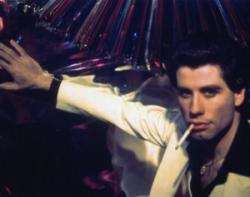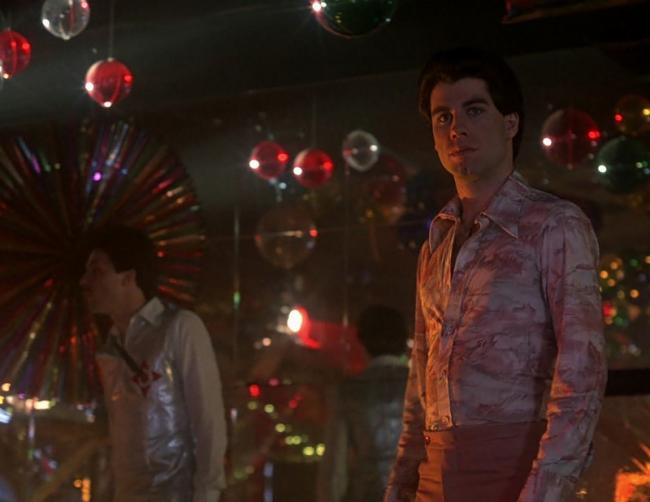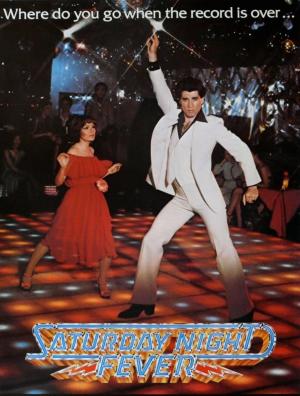



Saturday Night Fever is more than just a relic from the disco era. Sure it stands as one of the most indelible cinematic time capsules of the 1970s (check out the posters on Tony’s bedroom wall). But to judge it merely by the image of John Travolta in that white, polyester, bell-bottomed suit and black shirt, with the butterfly collar open halfway to his navel, doing that finger-pointing-to-the-ceiling dance move, on those lighted multicolored squares, is to sell it short.
Yes, Saturday Night Fever spawned the entire disco craze. It has one of the most famous, best selling soundtracks of all time, filled with classic songs like “Staying Alive”, “Night Fever” and “If I Can’t Have You”. But this movie also features a decent script and fine performances. In fact John Travolta was Oscar nominated.
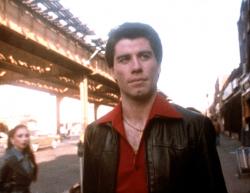
Travolta plays Tony Manero. He’s 19 and lives with his very Italian family in Bay Ridge, Brooklyn in the shadow of the Verrazano Narrows Bridge. During the week Tony works at a paint store but he lives for Saturday night where he reigns as king of the dance floor at the local discotheque. One Saturday he sees a woman dancing and likes her moves. Eventually they team up for the big dance contest and begin a tentative relationship.
Karen Lynn Gorney plays Stephanie. Like Tony she grew up in Brooklyn but has crossed the Brooklyn Bridge into Manhattan where she works in an office. Stephanie has big dreams and they don’t include getting romantically involved with a kid that’s going nowhere. She acts more sophisticated than she really is and is constantly namedropping the famous people she meets at work.
Tony is the leader of a gang made up of his childhood buddies. The dramatic climax of the story involves the meekest member of the gang who got his very Catholic girlfriend pregnant and doesn’t know what to do about it. There is a subplot dealing with Tony’s brother. He’s a priest but decides to leave the church.
The scenes of Tony at home provide a few laughs. A lot of hitting each other upside the head goes on at the family dinner table. “Would ya just watch the hair. Ya know, I work on my hair a long time and you hit it. He hits my hair.” Tony’s mother keeps a picture of her priest son over the mantle and makes the sign of the cross whenever she passes it or mentions her son’s name. Tony argues with his pop and cannot compete with his brother in his mother’s eyes.
The dance scenes are justly famous. Disco dancing took the ballroom style and loosened it up by adding a more rhythmic beat and a blatant sensuality to it. Travolta’s big solo dance to “You Should Be Dancing” is a show stopping moment. Wisely it was shot like an old fashioned Hollywood dance number with a limited amount of cuts and Travolta’s entire body is on display throughout.
This movie precedes political correctness. Tony and his friends toss words like “spic”, “nigger” and “faggot” around like Frisbees. In one scene they briefly harass a couple of gay guys and they complain when the music at the club gets too “ethnic”. By the end of the movie Tony has matured as a person and you get the sense that by the time he rides in that graffiti stained subway car, while the Bee Gees “How Deep is Your Love” plays, he is ready to take that next step in life.