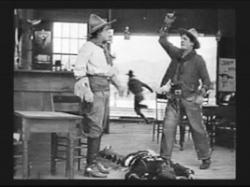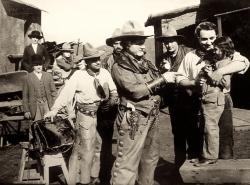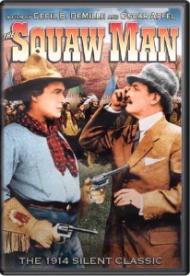



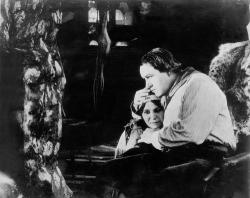
Cecil B DeMille's The Squaw Man is historically important as the very first feature-length movie ever to be shot in Hollywood. The year was 1914 and this tiny little farming community near Los Angeles would soon be transformed into the movie capital of the world. The Squaw Man also marked DeMille's directorial debut (technically he co-directed with Oscar Apfel) one full year before Griffith made The Birth of a Nation. More than anyone else in the history of film, DeMille would come to represent the icon of the silent movie director, flared pants tucked into knee high boots, megaphone in one hand and riding crop in the other, barking out orders to vast crowds of extras. Yes, we owe all the trappings of the classic Hollywood epic to Mr. DeMille, ostentatious, extravagant sets, gaudy - even vulgar - costumes, pious religious themes and of course sex, sex, sex.
Many of these concepts, albeit in a primitive form, are already present in his first movie. Scenes range from a wealthy British estate, to an ocean crossing ship that catches fire, to Times Square in New York City, to the rugged Wyoming countryside and even the Swiss Alps. Places that Hollywood, with ocean, desert and mountain all within a few hours of each other, could easily act as stand in for. Upon its release The Squaw Man was an immediate box-office sensation and DeMille liked the story so much that he would remake it twice. Once just a few years later in 1918 and then when his career was having trouble adjusting to sound he made a talking version in 1931.
The plot concerns a British nobleman, who is mistakenly accused of flirting with his cousin's wife and of embezzling charity funds. To save the family any disgrace - even though he knows his cousin Sir Henry is guilty - he sets off for America where he eventually finds himself in the Wyoming wilderness. When he gets caught in a snow storm in the mountains a young squaw named Nat-U-Ritch saves him from freezing to death and they get married and have a child together. They also do battle with a villainous cattle rustler by the name of Cash Hawkins. This interracial love affair, of course, ends tragically. Nat-U-Ritch dies in her man's arms in the final scene of the movie.
Unfortunately, DeMille stereotypes Native Americans in much the same way that Griffith did blacks in Nation. The chief of Nat-U-Ritch's tribe is shown as a lazy man who can be bribed by the mere sight and smell of alcohol. At the same time, however, DeMille should be given some credit for tackling the taboo subject of interracial love even if it is done with an old-fashioned mind set.
The Squaw Man provides tangible evidence that Cecil B DeMille is the true father of Hollywood.