


Given the low voter turnout for most elections these days, it's easy to forget that the right to vote--or not to vote as is often the case--was a hard won right for some. The sacrifices made by the women of the suffrage movement were great and deserve to be remembered. And although this movie tells the story of suffrage in the UK, its message should resonate with voters in any representative democracy.
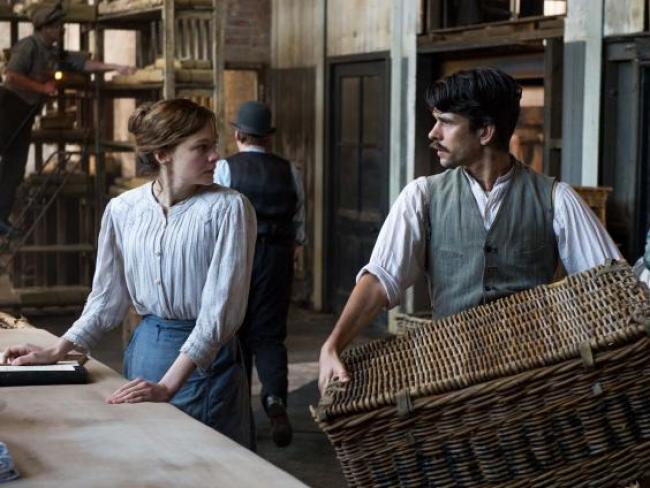
The plot weaves fiction with historical fact. Carey Mulligan plays Maud Watts, a young wife and mother who has spent her life working in a laundry under the supervision of a boss who sees the younger women in his employ as his for the taking. Maud is a fictional character, but is meant to represent the common woman of the period. She is drawn into the suffrage movement by her more militant co-worker Violet. Maud attends her first suffrage meeting more out of a show of defiance and rebellion than a deep belief in the cause, but her eyes are opened as she sees the chance to take a little more control over her own life.
As Maud becomes more dedicated to the cause, her life begins to change. Her husband doesn't understand her desire to change and is embarrassed by her actions. Eventually he throws her out and forbids her from seeing their son. While this portion of the story is meant to demonstrate how little legal powers women held at the time, it is also the film's weakest plot line simply because it is told in such a melodramatic manner. It's very much of the kitchen sink soap opera variety.
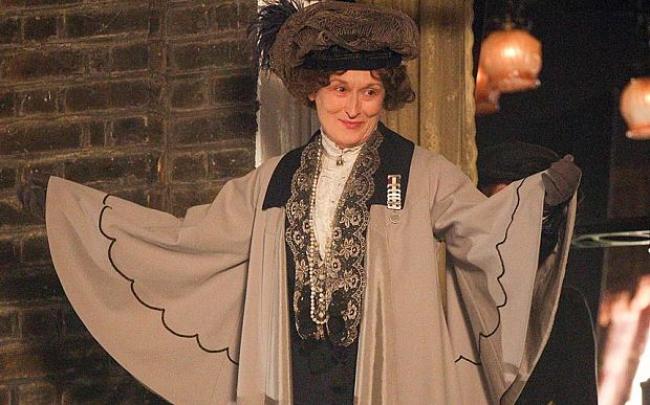
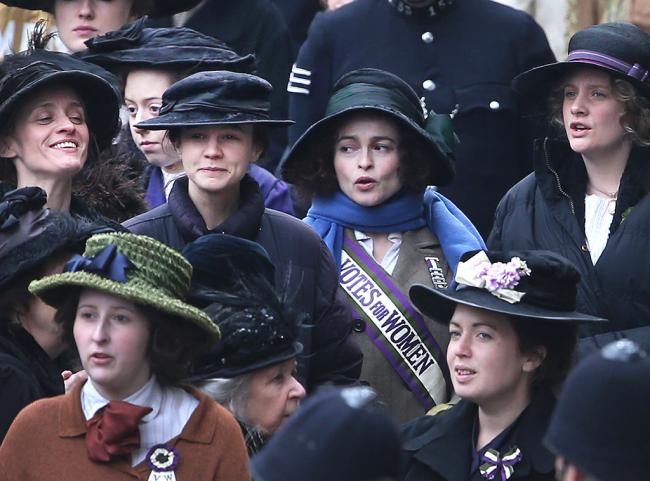
The political side is better handled and more entertaining, particularly when Maud takes part in actual historical events. She meets suffrage leader Emmeline Pankhurst and hears her speak. She takes part in the bombing of future Prime Minister David Lloyd George's house. And in the film's climax, she is present at the fateful events of the 1913 Epsom Derby. Maud and the other women of the movement are imprisoned for their beliefs--some of them multiple times--and force-fed when they go on hunger strikes. Their struggles are the film's strongest points, with the drama aided by the knowledge that these things really happened.
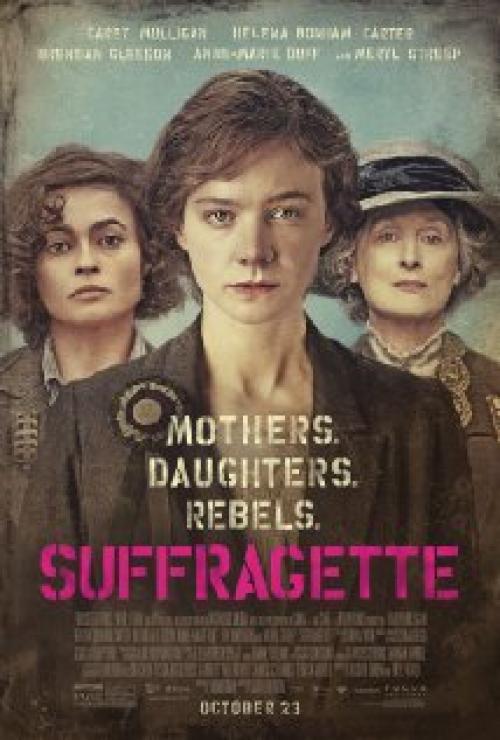
The cast is universally excellent. Mulligan begins the film as a downtrodden victim of life, too timid to speak up and accepting of her position in life, but gradually she strengthens, occasionally letting vent to the injustices she sees. Helena Bonham Carter, who in real life is the great-granddaughter of suffrage opposing Prime Minister Asquith, is terrific as the fiery group leader who is quick to take up the more violent side of the movement. Streep's presence in the film is quite small and out of proportion from what the marketing campaign would have you believe, appearing as she does in just one scene in what amounts to a cameo appearance.
With so much emphasis on the female parts, the men are underrepresented. Ben Whishaw as Maud's husband and Geoff Bell as her boss are fairly one-dimensional characters and are essentially the villains of the piece. Brendan Gleeson is the most interesting of the male characters. He plays the police inspector assigned to handling the suffragettes. At times he seems to admire them and their willingness to standup for their cause, but the script holds back from allowing him to be a completely sympathetic character.
This is a small film and its audience will likely be equally small. It's a shame really, because this film, or others like it, should be required viewing before being given the right to vote. Perhaps if more people appreciated how much was sacrificed by certain groups to win the right to vote, they might realize what a privilege it actually is.