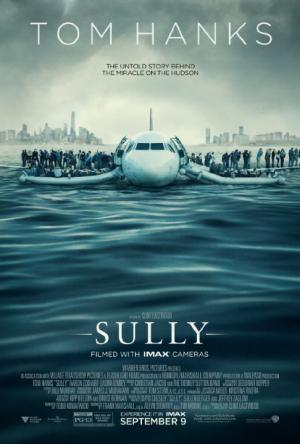


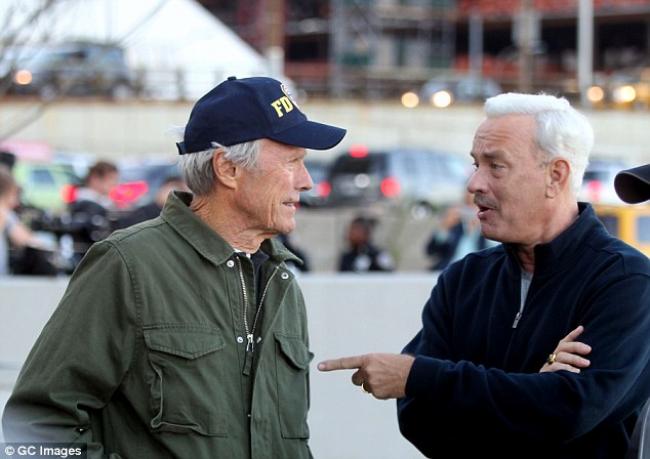
There are a couple of problems with trying to make a movie about the Miracle on the Hudson. Everyone already knows the outcome so what generates the tension? And, since Sully is universally regarded as a hero, what is the source of the dramatic conflict? Writer Todd Komarnicki and director Clint Eastwood are able to surmount these problems to varying degrees, thanks in large part to another fine performance by the film's star, Tom Hanks, but also by the editing and direction of the film, which keeps things moving along in an interesting and quick paced manner.
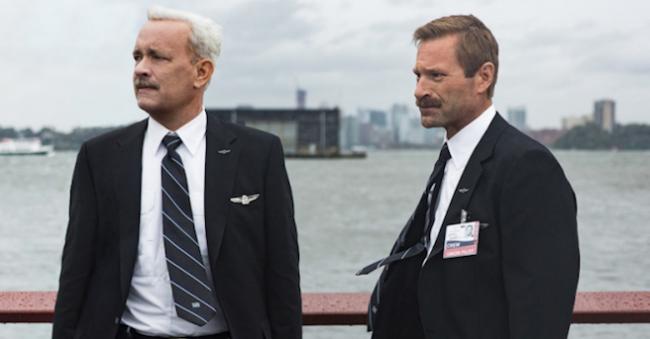
I'm sure most people still remember the story, but in 2009, an airliner out of LaGuardia airport in New York City, flew through a flock of geese just after takeoff, causing both engines to fail. With no other options, Pilot Sullenberger, forever known as Sully, managed to land the plane on the Hudson river, saving all 155 passengers and crew who were on board the plane. Although the entire incident only lasted 208 seconds, and we know everyone survives, Eastwood and company manage to keep the scene suspenseful and also to make it last, by weaving it into the movie via several flashbacks. It's very well shot and acted by Hanks and his co-pilot played by Aaron Eckhart. Despite some weak CGI of the plane actually landing in the Hudson, it feels very real and that sequence alone is worth the price of a movie ticket.
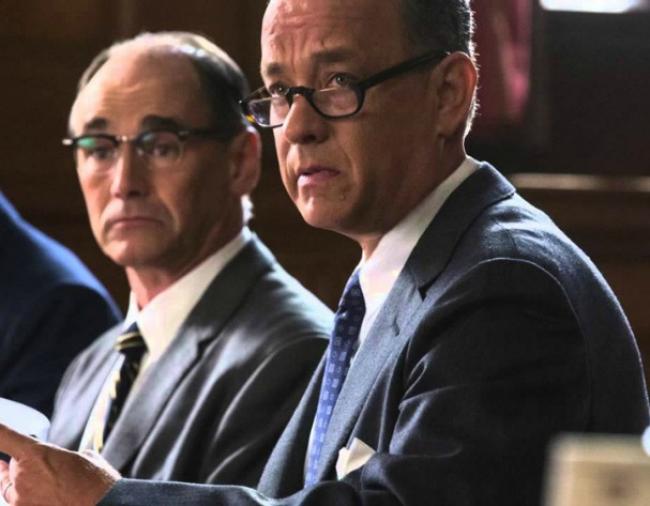
The rest of the film deals with the investigation of the incident and the immediate aftermath as Sully, a quiet, decent, family man, must suddenly come to grips with being a celebrity. And this is the part where Hollywood creeps into the film. Every movie needs a bad guy so here the script turns the members of the National Transportation Safety Board into the villains. Instead of just investigating the incident, they're on a witch-hunt to prove it was Sully's fault. There's talk about how the insurance companies are upset about the cost of the plane and the airline not being happy, but it's all made up for the film and it's never very convincing. The real NTSB investigators have objected to their portrayal in the film and very early on in the filmmaking process, they asked that their names not be used in the script.
While the villains are cardboard stereotypes, Hanks manages to make Sully feel very real. We learn via a couple of flashbacks how Sully has been flying almost literally his entire life. His questioning of his own actions and pondering if he made the right call are much more effective than the NTSB investigators' questions. As he puts it in the film, he's been flying for 40 years, but his entire career will now be judged by 208 seconds. Laura Linney plays Sully's wife and while she and Hanks never share the screen together, their phone calls are the heart of the film, since they give Sully the chance to express his doubts to someone, while still appearing heroic to the world.
The fear of being in a plane crash is universal to anyone who has ever flown. Whenever any of us fly, we're putting ourselves in the hands of the two pilots in that cockpit. It's what makes Sully such a hero, both in real life and in this movie. We want to believe that those pilots will behave as he did. That they will be able to bring us all down safely. We're so used to hearing about airplane tragedies that an event like this really does feel like a miracle. And this movie, despite its few minor weaknesses, manages to capture that feeling nicely.