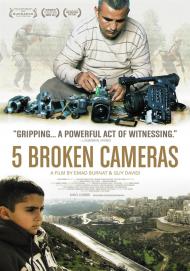



When I think of documentaries, I tend to think of them as factual, impartial, historical records, much in the same way that the news is supposed to be. Of course, in reality most documentaries are the exact opposite. The good ones are factual, but more often than not, instead of being impartial, they are produced to make a specific point or show an issue from a point of view. Such is the case with 5 Broken Cameras, the Oscar nominated documentary from Palestine.
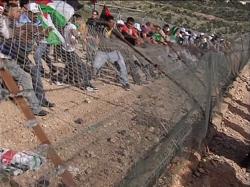
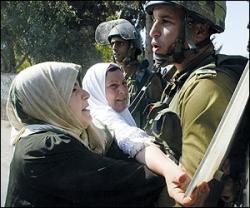
Emad Burnat is a Palestinian farmer from the village of Bil'in, in the West Bank very near to the border of Israel. When his fourth son was born in 2005, he was given a camera to record the event. Emad became obsessed with his camera and began recording other things, becoming the unofficial cameraman for his village. He began to record the weekly, non-violent demonstrations staged by his fellow villagers to protest the construction of a barricade by the Israeli army that cuts off over 60% of the village's farmland.
As the years go by, the clashes between the villagers and the military become more extreme and even deadly. When Emad's first camera is damaged during one of the protests, he acquires another one, eventually going through five different cameras in such a manner, as the title indicates. Each camera's “life” marks a sort of chapter in the story.
After the story of Bil'in gained international attention, Emad was approached by a Mediterranean film company with an offer for him to form a documentary out of his film footage. Emad in turn approached Israeli filmmaker, Guy Davidi, for help in editing and shaping a narrative for his film.
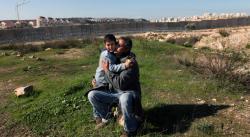
It was Davidi's idea to weave together the story of Bil'in's protests with personal footage of Emad's family. The film begins with the birth of Gibreel's youngest son and we see him grow along with the movement to get Israel to tear down their wall. It's a smart move as it makes the film much more personal. Rather than just a dry observation of events, the protestors are humanized. Emad is a family man and we get to know him and his friends.
Some of the narration, spoken by Emad, but written by Davidi, does come across a little heavy handed. It sounds very scripted and doesn't always ring true. Much better moments are created when Emad's camera records genuine conversations such as when his wife pleads with him to stop filming in fear that he will be arrested again and taken away permanently.
The personal point of view does give the film emotional resonance, but as someone who rarely follows the situation in the Middle East, I wouldn't have minded a little more historical perspective. Very little background is provided in the film. For example, the Gaza War of 2008 is mentioned, and although it's of paramount importance to the characters in the film, I had no knowledge of the details and none are provided.
By sticking to the personal point of view, we are shown the internal conflict of a country, but with universal appeal. Emad, his family, and their friends will be recognizable types to anyone who watches it. As a personal document it's a great success and even emotionally moving at times.