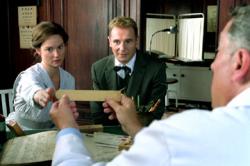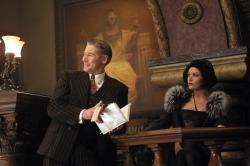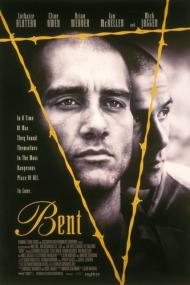


With so many recognizable names, and the holocaust as the subject matter, I decided to give Bent a shot. Based on a play, I was not sure what to expect. What I found was a gay love story about redemption and sacrifice. Unfortunately though, most of the famous faces are mere cameos.
Max is a gay playboy. He makes the rounds of the Berlin gay scenes. His boyfriend and roommate, Rudy, is a dancer at a club run by a drag queen, Greta/George, played well by Mick Jagger. The clubs are closing up as the Nazi's have made homosexuality a crime punishable by imprisonment. As the movie opens, Max takes a Nazi brown shirt, Wolf, home with him that he met at Greta's. He flaunts Wolf in front of Rudy. Some Nazi's come looking for Wolf, sending Max and Rudy on the lamb.
They make an effort to get out of Germany, but get captured and put on a train to a concentration camp. In a harrowing scene, Rudy is pulled into another car and beaten to death as Max listens. The Nazis then confront Max, who claims to not know Rudy.
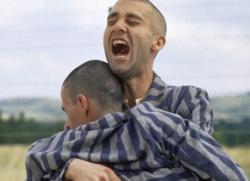
Scared by the event, Max pretends to be a straight Jew at the camp. He is given a yellow star instead of a pink triangle. He is put to work with a gay man named Horst. Much of the rest of the film involves their dialogue. They fall in love and through Horst, Max redeems himself over how he treated Rudy.
Based on a play, I expected some great dialogue, but very little stood out. My favorite line is when Max is asking Horst about the gay clubs he visited. After finding one they had both frequented, Max asks, "And you never saw me?" and Horst answers sarcastically, "Well, actually I did. I saw you by the river. You were making a fool of yourself, and I said, someday I'll be in Dachau with that man moving rocks."
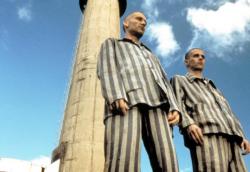
The films most memorable scene is when the two men are given a break from work. They stand next to each other in the hot sun for a few minutes. They start talking about being horny, and imagine having sex with each other. Although they do not touch or even look at each other, they are able to get each other off by their graphic sex talk. I guess they were very horny.
In real life gays in Nazi Germany were imprisoned, as the Jews were. However, people sent to the death camps were either killed or put to work for the war effort. In Bent, Max and Horst just move rocks and snow pointlessly. "You move rocks from there to there and then from there to back again." Perhaps I am nitpicking, but the Germans did not have enough soldiers to have one or two watch these men do nothing productive all day. It does not make sense. It is almost as big a stretch as the no touching sex scene.
The message of the film is a respectable one. Even though he is under harsh circumstances, Max learns to have pride in who he is. He took Rudy for granted, but he sacrificed for Horst. Through his relationship with Horst, Max gained honor. Is there any loftier message than that?