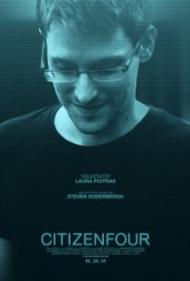



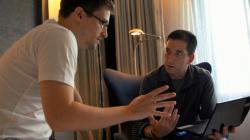
Citizenfour is a documentary by political film maker Laura Poitras, who claims to have been put on a government watch list in 2006 after making a film about the Iraq war. In January 2013, she began to receive emails from a source identifying themself as “Citizenfour” who claimed to have evidence of illegal covert surveillance by the NSA. They arranged to secretly meet in Hong Kong that May. She brought her camera and two reporters, Glenn Greenwald and Ewen MacAskill.
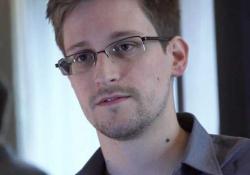
Citizenfour turned out to be Edward Snowden, a 29 year old former employee of the Central Intelligence Agency and the Defense Intelligence Agency. He worked undercover as a contractor to the U.S. National Security Agency facilities in the United States and at an NSA outpost in Japan. In March 2013, he worked at the consulting firm Booz Allen Hamilton inside the NSA center in Hawaii.
Snowden establishes several things at the beginning of the filming. He originally voted for Obama but due to Obama not keeping any of his promises, voted third party the following election. It was that disillusionment and his feeling that the American people no longer had the ability to oppose the government’s power by the internet being monitored, that compelled him to come forth.
He states that he is willing to risk his freedom for the people’s right to, “…intellectual exploration.” He takes full responsibility for his actions and states that no co-worker or family member knows what he is doing. He also tells Greenwald, “I am not the story here.” That may have been his intention but that is all this movie has to offer.
All of those who cared heard or read the news stories when they were released. This documentary sheds little new light onto the subject to those of us who followed it. We get several scenes of Snowden watching news television, looking at himself in a mirror and answering the reporter’s questions. For some reason, Poitras includes scenes of Snowden simply typing on his computer or looking pensive. Snowden becomes the story whether he wanted it to play out that way or not. The movie becomes more interesting when he comes out as the source and the media literally begins stalking him and he realizes that he may be arrested and extradited for what he calls political speech. He then goes underground ending up in Russia after the United States revoked his passport during a layover in Moscow.
One of the most fascinating aspects to Snowden’s story is how differently people reacted to the information he revealed. It is a subject this documentary barely touches. The Obama administration immediately called him a traitor for revealing that the United States actively spies on other nations. Who is dumb enough to think that we did not spy on other countries? As if they do not spy on us.
No, the reason that became the administration’s stance was to deflect from the real interest of the story being that the United States government is spying on other countries for reasons other than national security. Greenwald states at a hearing that since 9/11 the government’s excuse was that “Everything is in the name of national security, to protect our population.” But many documents Snowden showed him revealed it is about “…competition between countries and with companies’ industrial, financial or economic issues.” also that the government is not just keeping track of who is communicating with who but the actual content of those emails, texts, google searches and phone calls. Where have you gone George Orwell? A nation turns its lonely eyes to you.
Snowden is preaching to an ever growing choir when he says, “The balance of power between the citizenry and the government is becoming that of the ruling and the ruled as opposed to the elected and the electoral.” We are later shown a clip of President Obama giving a very unconvincing speech. “I don’t think Mr. Snowden is a patriot.” He attempts to speak for the American people when he says there should have been a lawful examination and debate on the (surveillance) laws that would, “…lead us to a better place.” He is a politician.
That will forever be Edward Snowden’s legacy. Some will see him as a hero, revealing to the world just how little privacy they have and just how unfair the world is if you are the one that is privy to that information. Others will see him as a traitor because they do not like having the truth embarrass their President.
No matter where you stand on this issue, you should consider this quote by J. Applebaum, “When we lose privacy … we lose freedom itself.”