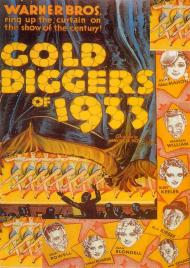



Gold Diggers of 1933 is the quintessential Depression era musical. Although MGM would later become synonymous with the golden age of the Hollywood musical, Warner Bros., with the singing/dancing talents of Ruby Keeler and Dick Powell along with musical numbers conceived and directed by Busby Berkeley, was the king of the genre for a brief period in the early 30’s. 42nd Street is more iconic and Footlight Parade boasts Jimmy Cagney in hoofer mode, but Gold Diggers of 1933 is the best of Warner’s pre-code musicals.
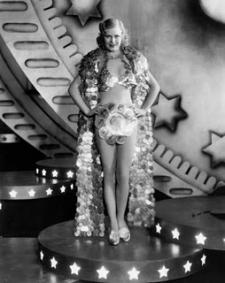
The opening number is the most famous scene. A close-up of Ginger Rogers singing “We’re in the Money”. The camera pulls back to reveal Ginger and fellow chorus girls wearing costumes made from coins. The backdrop features giant coins. The lyrics are all about “spending, lending and sending money rolling along”. The irony fairly drips from the stage. The final song is a blues number called, “My Forgotten Man”. It features soldiers returning triumphantly from the first world war, then seconds later these same men are standing in a bread line.
Like all musicals of its day, this is a back stage musical. The songs and dances all take place in the context of a show. Characters didn’t break into song to express their feelings until Showboat revolutionized the genre a few years later. Unlike many backstage musicals Gold Diggers has a clever plot involving mistaken identity and plenty of fast paced wise-cracks. One woman tells her heavy set dance partner that he is “light as a heifer, uh feather.” A clearly middle-aged actor complains about being told how to sing a song by saying, “I’ve been playing the juvenile for 18 years, don’t tell me I don’t know how to sell a number.”
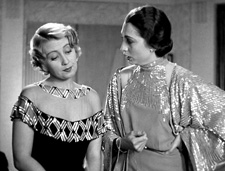
Besides Keeler, Powell and Rogers the cast includes the under appreciated Joan Blondell. She is, in fact, the female lead opposite Warren William in one of his best roles. He plays Powell’s snobby overprotective brother. He mistakes Blondell for Keeler and tries to keep her from marrying his younger brother as she is a show girl and they are Boston bluebloods. Sure you can see where it’s going but the plot whizzes along.
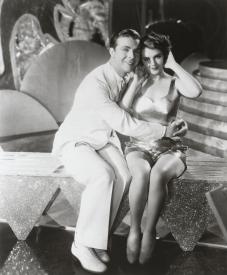
The musical numbers are innovative. The song “Pettin' in the Park” would not have been filmed just a few years later after the enforcement of the Hays Code. Chorus girls are shown in silhouette behind a scrim. They are wearing bras and pantyhose but appear to be naked. At the end of the number Dick Powell uses a can opener to begin cutting a hole in the metal dress Ruby Keeler is wearing. The penultimate number is visually impressive involving neon violins and Berkeley’s trademark camera on the ceiling.
Directed with gusto by Mervyn LeRoy and so popular that it spawned sequels in 1935 and '37, this is one of those movies I had seen clips from all my life. Whenever characters in movies set during the Depression go to the movies it seems as if Gold Diggers of 1933 is always playing. Now that I’ve seen it I understand why. It has a great cast, funny dialogue, memorable musical numbers and a patriotic finale sure to lift the most financially strapped heart.