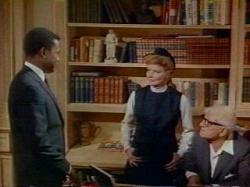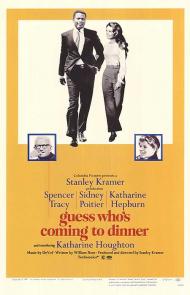



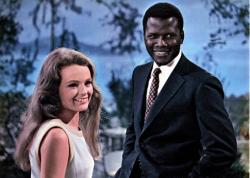
In 1967 Guess Who's Coming to Dinner? was a socially progressive film. Today it seems quaint, yet still relevant. Lead by a memorable cast, this movie rises above its weaknesses.
Joey Drayton, played by Hepburn's real-life niece Katharine Houghton, a fresh-faced innocent looking young girl, arrives home from Hawaii with her new fiancé, Dr John Prentice. But wait. John Prentice is 'a Negro', as described by 'Caucasian' Joey, to her mother. Before the parents can get all of their objections sorted out, they have John's parents coming to dinner as well. Both sets of parents have reservations about this union.
The movie glosses over the subject of interracial marriage without getting too detailed. The big objections are that they may get negative reactions from other people. Poitier's Dr Prentice is portrayed as an in-law's dream. He and Joey haven't even had sex yet. Joey walks around looking angelic and clueless. Their relationship and chemistry in the movie is weak.
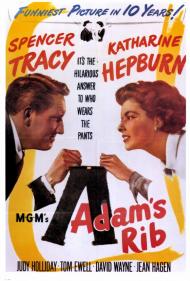
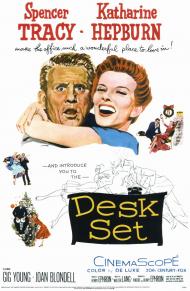
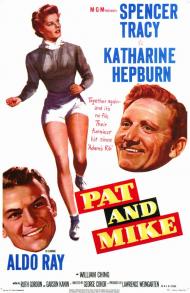
The greatest things about Guess Who's Coming to Dinner? are the characters of Joey's parents, Matt and Christina. Matt is a liberal journalist (as if there is any other kind) whose liberal thinking is put to the test by the intended nuptials. The best scenes are when Matt and Christina discuss the issue at hand. This was Tracy's last movie, but his onscreen chemistry with Hepburn is as great as ever.
Poitier, being the only leading black actor at the time, was terribly miscast. Why the parents never question the age factor is beyond me. Poitier has got to have 15 to 20 years on Houghton. As a parent, that would have raised more eyebrows with me than the skin color. Poitier's acting is adequate at best. What is with those hand gestures he makes in the scene where he is talking to his father?
Hepburn's and Tracy's characters and performances save this film. Their liberal views are challenged when a social issue comes home by means of their only daughter. In this we find the greatness of this movie. It holds up the question to all who view it. Do we just support things when they apply to other people, or are we actually as liberal and/or conservative as we think when it comes to practicing what we preach?