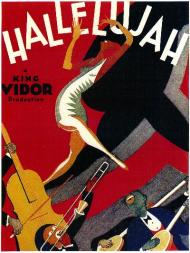



Hallelujah! was a groundbreaking motion picture. It was the very first big-budget, full-length, all-black talkie ever made in Hollywood (it was preceded in theaters by a few months by the low budget all-black Fox talkie Hearts in Dixie). This musical drama was directed by King Vidor from his own story idea. It was a project he felt strongly about. In order to convince MGM to take a chance on a big-budget musical with an all-black cast he had to agree to forgo his salary and he even put up half of the movie's production cost from his own pocket. The result is a powerful, if dated, musical melodrama.
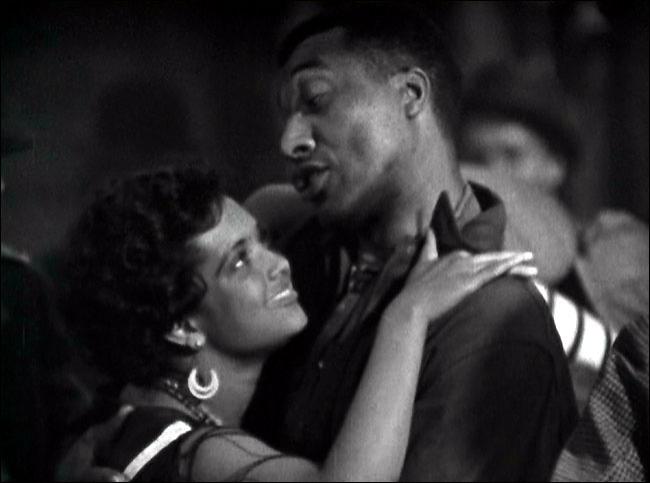
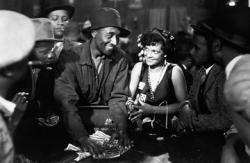
This is the story of Zeke, a cotton picker living in rural Tennessee with his elderly parents and numerous younger siblings. Accompanied by his brother Spunk, he goes to town to sell the families' cotton crop. Zeke makes the fatal mistake of being led astray by a woman he encounters dancing on the street. She takes him to a juke joint where he gets involved in a crooked game of craps and soon finds himself parted from his money. A bar fight ensues and Spunk is fatally wounded by a gun shot. Zeke finds religion and turns preacher, but when the sultry Chick once again crosses his path will he be strong enough to resist temptation?
Hallelujah! was originally shot silent and the voices were dubbed in later. Some of the dialogue is hard to make out as many of the actors seem to mumble their lines, and there is quite a bit of screeching by the womenfolks as well. It is glaringly noticeable that the actors mouths don't always sync with their words. Despite these technical problems the direction is otherwise inspired. Vidor sets up many interesting camera shots, especially memorable is a riveting chase through a swamp at the movies' climax.
The majority of the songs are movingly sung, traditional spirituals including "Sometimes I Feel Like a Motherless Child", "Go Down Moses (Let My People Go)", "Old Folks at Home", "Swing Low, Sweet Chariot" and "(Gimme Dat) Old Time Religion" among several others. The exceptions are two Irving Berlin songs included at the studio's insistence. The first of these was called “Waiting At The End Of The Road” and was sung by a group known as the Dixie Jubilee Singers in a scene at the cotton marketplace. The other Berlin tune was called “Swanee Shuffle” and was song by the flapper vamp named Chick that seduces Zeke.
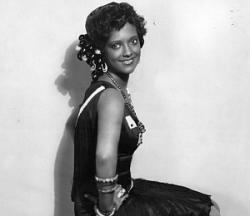
Chick was memorably played by the 17-year-old Nina Mae McKinney, making her movie debut. Although some of the acting seems amateurish by today's standards, the central performance by Daniel L. Haynes is quite good, and more natural than some movie acting of the 1920s. The adult subject matter is handled in a frank manner, befitting the pre-code status of the movie. It was re-released in 1939 by MGM to capitalize on the success of Gone with the Wind. They added newly designed opening and closing credits for the occasion and this is the version currently being shown on TCM.
Hallelujah! Features a cast of hundreds and was a surprise box office success in the summer of 1929. King Vidor garnered an Oscar nomination for Best Director (he would lose to Lewis Milestone for All Quiet on the Western Front). From today's standpoint it can be viewed as filled with racist stereotypes, but at the same time Hallelujah! shows an honest depiction of the hardships and realities of life in rural black communities in the early decades of the 20th Century. An historically important motion picture.