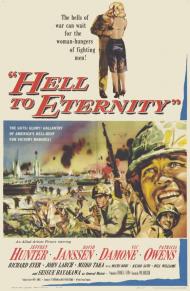



The story of Guy Gabaldon is just ripe for the telling, and Hollywood should sincerely consider re-making his story into a new movie. Guy's story is unique in that he was a minority who was raised by another minority group. Here is a boy with different ethnic influences who grew up to be an American hero.
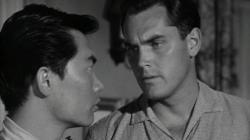
Guy Gabaldon was a Hispanic boy growing up in a dysfunctional Los Angeles home in the 1930s. According to the movie, his best friend George was a Japanese boy whose brother was a coach at their school. The film is vague on how it all comes to pass, but Guy ends up moving in with them and the coach's parents. The two generations of Japanese-Americans became Guy's foster family. He was particularly close to the mother, who taught him how to speak Japanese.
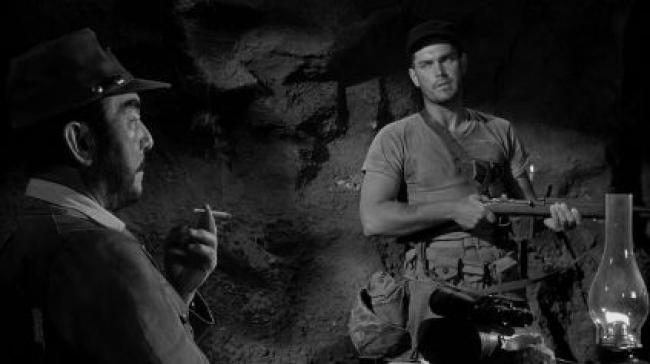
When World War II started, his new family was sent away to an internment camp. Guy gets drafted when he comes of age. His ability to speak Japanese quickly makes him a valuable asset. A large portion of the film features the deadly battle and capture of Saipan. When he and another marine are hiding near some Japanese, he is able to translate their plans. His big moment comes when he faces down a Japanese General who ends up killing himself in front of 800 Japanese soldiers. Guy then convinces them all to surrender.
Hell to Eternity plays out in three acts. The first is his youth, being raised with the Japanese family. The third and longest is the realistic, action packed fighting in the war. The second act is shortest, but also the most out of place.
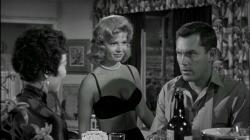
Guy and two other GI's spend their last day of liberty getting drunk and trying to get laid. Their search for a good time ends in a room with a cold Japanese matriarch, a Japanese stripper with all the right curves, and an uptight American girl in uniform. The stripper gives them a show while the men hoot and holler. Once the American girl gets drunk enough she decides to do the same, causing much more lascivious reactions from the soldiers.
As I wrote in an article, 1959 to 1961 were the years where men in film were finally allowed to act horny without being a villain. Sure, sex on film happened before 1959 but it was usually done in the chastest of ways. Often male characters were ashamed or created excuses for acting on lustful thoughts. What was it about 1960 that finally allowed the pursuit of recreational sex to be acceptable in American movies?
It is an interesting scene and the girls look good in it. It was highly censored as you see more of the guy's reaction than you do the women in their underwear. It is a decent scene but it should have been cut. It has nothing to do with the rest of the story of a bilingual minority becoming a national hero. The film runs over two hours long and ends on the battlefield. Although at one point he gets a letter from his foster mother, it would have been nice to see a reunion between them. It would not have been as titillating as the stripper scene, but it would have made better sense plot wise.
As a six foot Caucasian with matinee idol good looks, Hunter was not the most realistic casting choice. He was a fine enough actor but he did not resemble the short, average looking Guy Gabaldon. Hunter was the same age as Gabaldon, but he filmed his scenes 15-20 years too late. With all the young male Hispanic actors in Hollywood today, I am sure they could find a better match to play the highly decorated Gabaldon, if they ever re-make this film.