
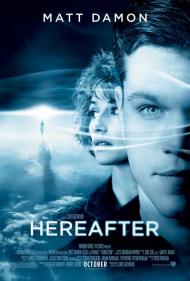


A movie about the afterlife could go in many different directions. It could deal with religion of any kind or it could focus on denial. It could try to make a definitive statement or it could leave you asking questions. Eastwood's Hereafter does none of those things, and you could accuse him of taking the easy way out by playing it very safe and as non-offensive as possible. What he does do is what all of the best Eastwood films do, and that is make an entertaining character-driven film.
Perhaps it's because Eastwood is also an actor that his movies do always put the focus on the characters. He knows that it isn't the special effects, the action or the locations that are the most important part of any movie because if you don't care about the characters, none of that other stuff really matters. Without well-written parts and actors capable of delivering solid, believable performances in those parts, nothing else matters.
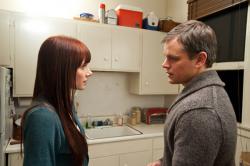
Hereafter gives us three solid such performances by three different actors. Cecile de France plays a French journalist who has a near-death experience when she nearly drowns during a tsunami. Twins George and Frankie McLaren play twins Marcus and Jason. Marcus is devastated by the death of his twin brother Jason. And finally Matt Damon plays George Lonegan, a psychic with the genuine ability to speak with the dead.
The plot shows each of them dealing with their own unique problems. Marie, the journalist, believes that she caught a glimpse of the afterlife while she was "dead" and begins to do research into the subject of near-death experiences to the detriment of her career. Marcus too becomes obsessed with death following Jason's death and begins to research ways of communicating with his dead brother. George has the opposite problem. He wants to avoid death and has given up his career as a psychic and taken a factory job in an attempt to get away from his old life. All of their stories eventually collide in London near the end of the story.
Although the characters ask deep questions and George actually has the ability to speak to the dead, no answers are ever given. God and religion barely get a mention. Eastwood and screenwriter Peter Morgan don't provide an opinion on what they think happens after death and this does lessen the impact of the story. What's left feels like soap opera. Very well done, interesting and entertaining, finely acted, written and directed soap opera, but soap opera nonetheless.
The pacing of the film is measured. There are a couple of action scenes, but this is human drama above all else. The showiest scene is the tsunami, which takes place in the first five minutes. I was never bored, but since the previews give more time to the tsunami and London Underground bombing than they deserve in comparison to how much time they actually take up in the story, I felt I should point this out.
Like nearly all of Eastwood's films, there is plenty to enjoy here. A finely drawn human drama, it just fails to go far enough with the supernatural elements.



I really liked this film. I do psychic readings, and could really relate to what George "saw" in his visions. I understand that the average movie goer cannot relate to what I liked - and can therefore see where they would be bored, etc. When people ask me 'how do you see the future"? I also tell them - I do not know. I do believe that some day science will have an answer - after all, look at what they have done with working with genes, and DNA, etc. They tell us that we use only 10% of our brain - and I am sure there is research going on about that.
On a slightly other note, I wish they would make a movie re: Edgar Cayce, the famous American psychic. No THAT would be a movie!