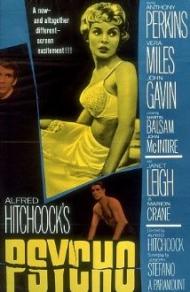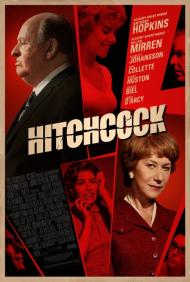



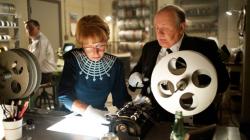
“Call me Hitch, hold the cock.” is the slightly naughty pun with which Alfred Hitchcock introduces himself in Hitchcock. This gives you a good idea of the type of wink at the camera humor in this clever and well acted look at the behind the scenes goings on during the making of one of Hollywood's most celebrated horror films, Psycho.
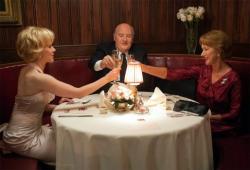
Anthony Hopkins and Helen Mirren both give Oscar worthy performances as the iconic director and his wife of many years, respectively. Hopkins, who once met the real Alfred Hitchcock years ago in a restaurant, does a flawless imitation of the iconic director. He has the voice and mannerisms down pat. Mirren has the easier role in the sense that modern audiences aren't familiar with the way Alma Reville looked or talked. But she creates a believable woman who was, in her own way, as remarkable as her universally recognized husband. After playing Leo Tolstoy's wife in The Last Station she's got a great late career run going playing the wives of famous creative geniuses.
Hitchcock reminded me a bit of last year's My Week with Marilyn. Both are set during the making of a specific classic movie and both of them deal with the behind the scenes drama that ensued. Also like that movie, Hitchcock is at its most entertaining when recreating scenes from Psycho or showing the famous actors in the cast interacting off camera.
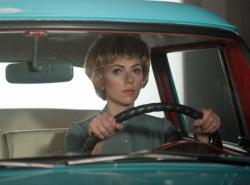
Of the cast of Psycho, Scarlett Johansson gets the most screen time as Janet Leigh. She looks the part in that blond wig, especially when recreating scenes of Janet Leigh as Marion Crane driving a car while lonely stretches of highway are rear projected behind her. Jessica Biel gets a few good scenes as Vera Miles (Hitchcock's former muse who angered him by turning down the starring role in Vertigo). James D'Arcy gets much less screen time as Anthony Perkins. Unlike Scarlett Johansson he doesn't get to recreate any of the scenes from the movie as Norman Bates.
Ed Gein, the notorious serial killer that inspired Norman Bates (as well as events depicted in The Texas Chainsaw Massacre and the character Buffalo Bill in Silence of the Lambs) gets shown in dreams and/or the imagination of Alfred Hitchcock throughout the movie. In fact he plays a bigger part in the story than the character he inspired, Norman Bates.
The focus often strays from the making of Psycho to petty jealousies between Alfred and Alma behind the scenes. In some ways it's more of a cinematic love letter to Alma Reville (aka Mrs. Alfred Hitchcock, the woman behind the famous profile in silhouette) than it is an homage to the movie Psycho. Still the story draws you in and gets better as it goes along. The ending is a fitting tribute to the legendary director (with arguably the most celebrated career in the history of film) and his loyal wife, a woman that played an essential part in her husband's success.
Like the man himself, Hitchcock the movie balances sly humor with hints of something sinister lurking beneath the surface. At any rate the man was a storytelling genius whose passion for film-making comes across in every scene. And for those unaware of her enormous contributions to his career, Hitchcock at long last turns the spotlight on Alma Reville. Together the two of them crafted a movie legacy that will echo across the centuries.