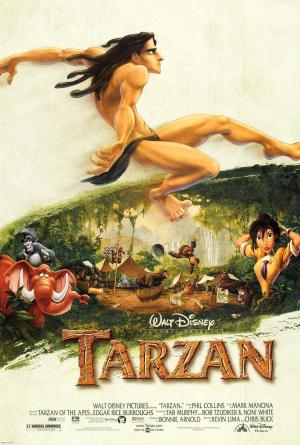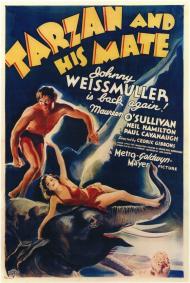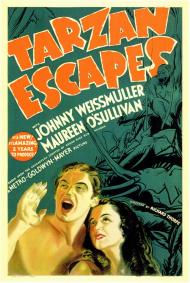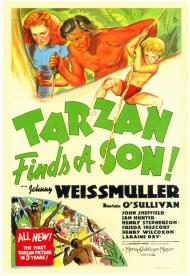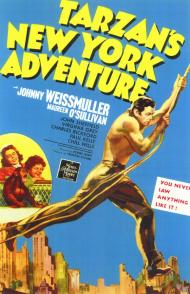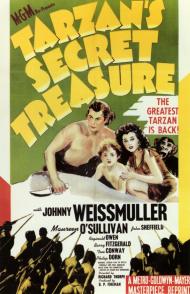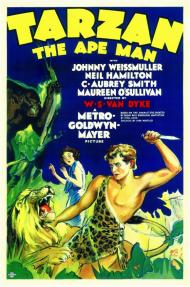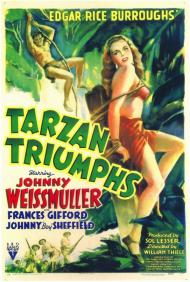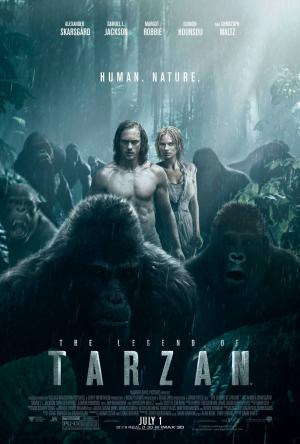


According to IMDB, this is the 84th theatrical film to feature the character of Tarzan. That's dwarfed by the over 300 films to feature Dracula, but still, he's certainly one of the most frequently used characters by Hollywood. Having been used so many times before, you'd think that it would take some extreme justification to drag the character out of mothballs one more time, but after watching this movie I can't say that The Legend of Tarzan provides that justification. Despite the power of CGI, Alexander Skarsgård's washboard abs, and the updating of Jane to try and make her more than just a damsel in distress, this movie ultimately doesn't offer anything more, and in some ways it offers less, than those Tarzan films of the 1930s and '40s.
One thing the film does right, is the method of telling Tarzan's origin. It is interwoven with the main plot, which begins with Tarzan already an adult living in London as Lord Greystoke. He is drawn back to the Belgian Congo by an emissary of the United States, played by Samuel L. Jackson, who suspects that the ruling colonists are enslaving the natives. Tarzan, with Jane refusing to stay behind, heads back to Africa to investigate. What he doesn't know, is that he is walking into a trap set by an old enemy. Along Tarzan's journey, certain events trigger memories of his past and we see briefly the death of his human parents and his raising by apes. It's a nice way of dealing with his origin, without letting the film get bogged down by it, since, let's face it, his story is so familiar. Many a superhero movie could learn from this method (especially after the umpteenth reboot).
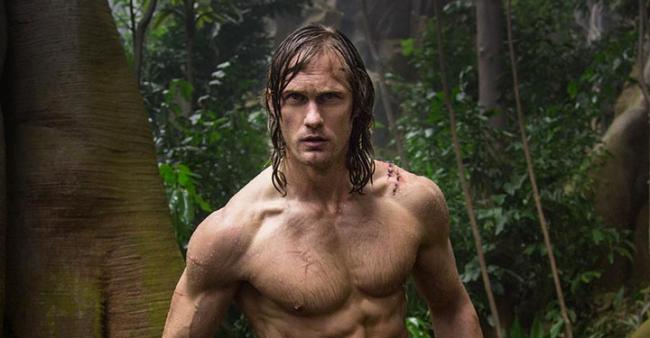
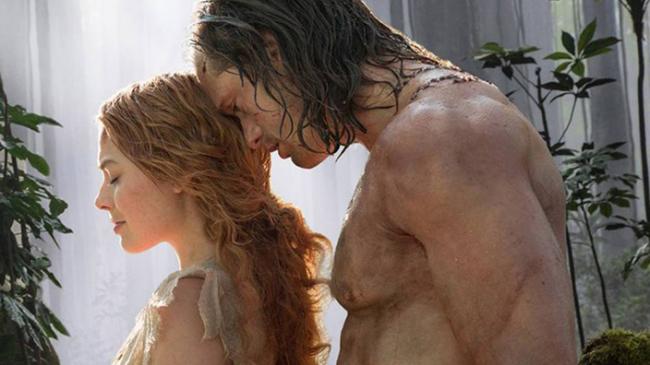
The best thing Skarsgård has going for him is that he looks the part. His 6'4" muscle bound physique and long, flowing hair embodies the character and is one of the few actors to play him who seems almost capable of Tarzan's superhuman feats of strength. Of course, he is aided by CGI and it's all too obvious when Tarzan is swinging through the jungle exactly when the CGI takes over. Unfortunately, Skarsgård's Tarzan has all the personality of a tree and his performance is equally as wooden. His English accent comes and goes so much that I wonder why he even bothered to attempt one. We hear the famous Tarzan yell twice in the film, but both times Tarzan is off camera when it happens. Perhaps showing Tarzan performing it would have meant Skarsgård would have had to put an expression on his face, something he seems to avoid.
Speaking of the CGI, the technology has come a long way, but you'd never know it by the effects in this film. The animals, which all appear to be computer generated, never feel real, or as if they have any weight to them.There's a scene where a blue butterfly lands on Jane's shoulder, but the animation fails to even line up with Margot Robbie's eyeline making the effect laughable and the character myopic. It was always obvious in the Tarzan films from the 1930s when film footage of a wild animal was inserted, but at least it was film footage of a real animal. 80+ years later we shouldn't still be talking about how unrealistic the animal scenes look.
The supporting human cast fares better. Samuel L. Jackson's character is the one fresh element to the story and he provides some much needed comic relief and a sense of fun that the rest of the movie is sorely missing. Margot Robbie makes a good Jane, but despite a feisty attitude and a refusal to scream, still ends up needing rescuing by Tarzan. Christoph Waltz is fine as the villain, but by now we have seen him play this character many times.
I'm sure this won't be the last time we see Tarzan in a film. Hopefully though, the next time the character is rebooted the writers will have something more original to say with him.