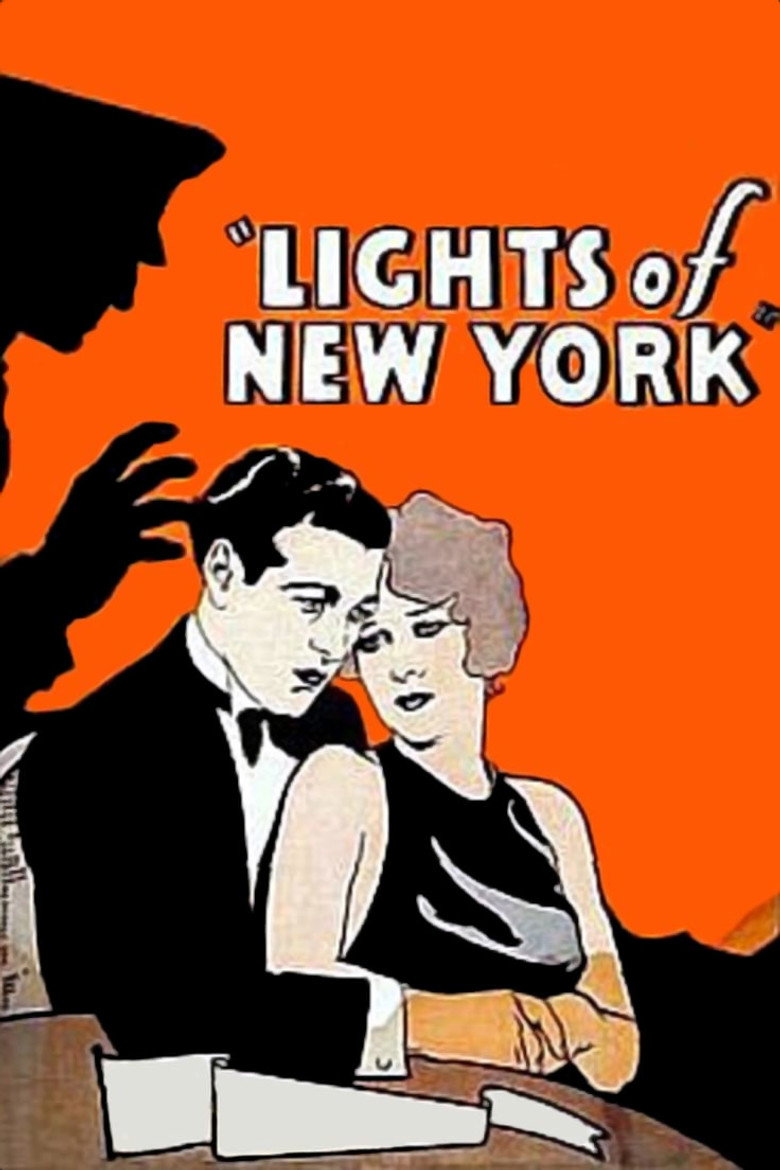


Lights of New York poster
Reviewed by Patrick & Scott

Lights of New York (1928)

FIRST 100% ALL TALKING PICTURE!

Directed by Bryan Foy. Warner Bros.. Starring Helene Costello, Cullen Landis, Mary Carr, Wheeler Oakman, Gladys Brockwell, Robert Elliott, Eugene Pallette, Tom Dugan.

Buffs' average★★2.0 / 4
Patrick
★★
“History making.”
Scott
★★
“Historically important, but not much entertainment value.”
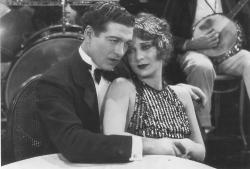
Cullen Landis and Helene Costello in Lights of New York.

Lights of New York is a forgotten motion picture outside of serious movie buffs. But it is historically important for being the very first feature-length all-talkie movie ever made. The Jazz Singer gets all the credit even though it is really a glorified silent movie with a few songs and a smattering of spoken dialogue. Lights of New York is a full-fledged sound picture.

The Jazz Singer was released in October of 1927 and became a sensation. It wasn't, however, until the following summer that the talkies truly arrived. It took those intervening months for the studios to make the transition, as well as movie theaters that had to install expensive sound systems. Seen today Lights of New York offers little in the way of entertainment but it was a huge hit with audiences in 1928. Reports vary but it grossed somewhere between 20 and 40 times its production budget. By the end of 1929 (with the notable exception of Charlie Chaplin) Hollywood was only making sound pictures.

It tells the story of a couple of rube barbers from the sticks who get conned into buying a barbershop in Manhattan that is really a front for a speakeasy. This leads to a cop being murdered and subsequently the head bootlegger attempts to frame one of these innocent dupes. As an early gangster picture it features several cliches. For example this was the first time a character in a movie tells someone to, “Take him for a ride.”

The acting is pretty stiff and amateurish with Gladys Brockwell over-emoting in the big climactic scene. Helene Costello got top billing even though she has much less screen time than Landis. The handsome but untalented Cullen Landis has the real starring role as Eddie, the young barber off to make good in the big city with his mother's life savings. The most recognizable face in the picture belongs to Eugene Pallette, who plays Eddie's pal and business partner. Edward Everett Horton appears as an extra, see if you can spot him.

As Singin' in the Rain so humorously demonstrated, the camera movement in the movie is severely limited by the newfangled concept of microphones. In many scenes the actors practically huddle together so as to have their lines picked up by the primitive recording process. In one scene the microphone is obviously planted in the top of a telephone on a man's desk. The actor speaks his lines with his head hovering close to it.

If Lights of New York had been made just a few months later it would long since have been forgotten by even the most avid movie buff. As the very first all talking movie, however, its historical importance is unquestioned. But truth be told it's really pretty awful.
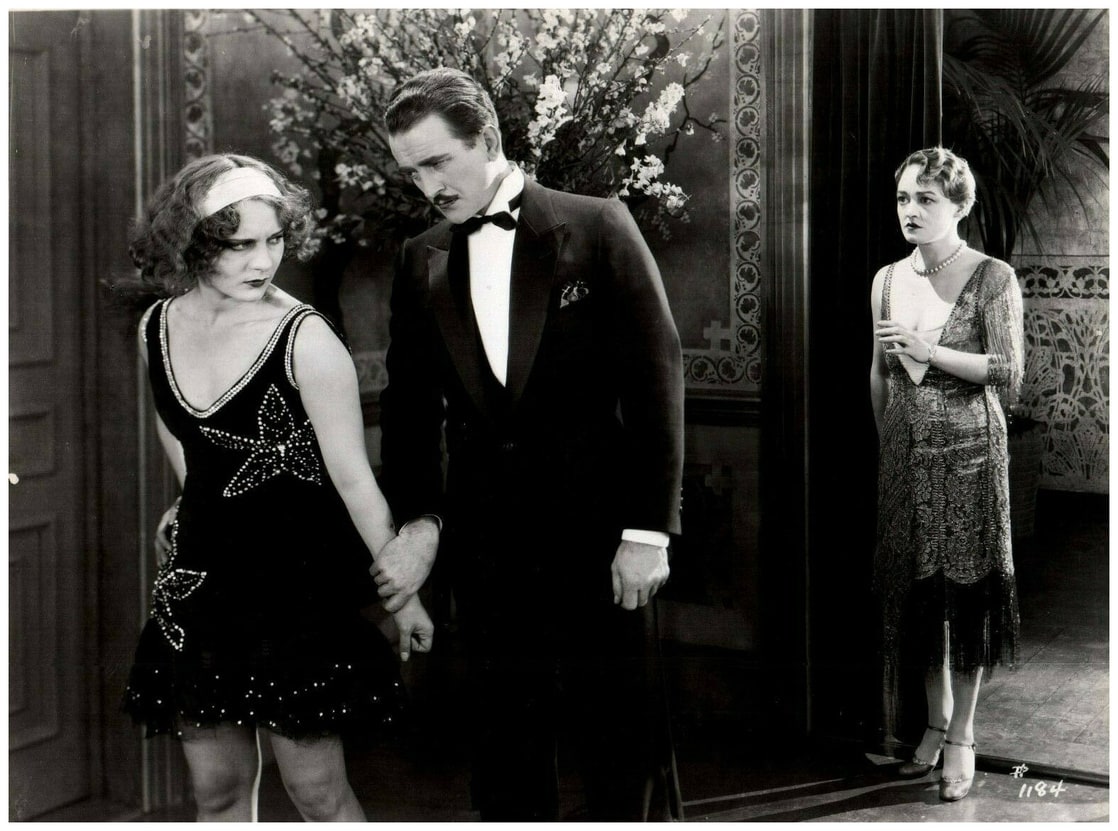
Gladys Brockwell, Helene Costello, and Cullen Landis in Lights of New York (1928)

Vastly overshadowed by The Jazz Singer, Lights of New York deserves to be remembered for being the first true all-talking feature. However, as Patrick said, unfortunately it’s just not that entertaining. It’s more of a curiosity these days. A footnote or the answer to a trivia question rather than a piece of entertainment.

It was, as Patrick said, a huge hit with audiences of the day, but I would guess, based on the reviews of the time, that this was more from curiosity about the novelty of it rather than anything else, since the reviews were less than kind. The New York Times called the plot “crude in the extreme” and the direction wooden, only singling out the musical interludes for praise. Film Daily said it was “Ordinary cast and production. Discard the talking element, and it is just a second-rate meller [slang for melodrama].” Variety said, “In a year from now everyone concerned … will run for the river before looking at it again.” The New Yorker seemed to like it even less, saying, “It would have been better silent, and much better unseen. The talking films have not even progressed to their infancy yet. Bad as it is, though, the film shows what I have been very reluctant to believe, that audibility will be a great help to the movies.”

I have to agree with my brother and the reviews of the time. This is an important film but not an entertaining one. However, someone had to crawl before others could walk, and that’s what this movie does. You can see the future in it. Not just in sound, but also in the direction toward the gangster movies of the 1930s.

Unfortunately for this movie, while it does point toward the future, it lacks what those future gangster movies had in spades, and that is personality and star power. The plot in this one is cookie-cutter with no personality at all, and it desperately needed the likes of James Cagney or Humphrey Bogart to give that star power. Cullen Landis, the male lead here, has nowhere near the charisma of those future stars, and despite appearing in over 100 silent films, he would leave Hollywood just two years after this one to make industrial films in Detroit, Michigan.

I have to agree with the New York Times when it said that only the musical numbers are worth praise. They are among the few moments where it doesn’t feel like the camera frame is just two or three men standing very close to each other (and the microphone) doing nothing more than talking and looking slightly uncomfortable.

At just 57 minutes, this isn’t a long movie. If you’re curious about seeing it, it won’t waste much of your time, and thanks to its being in the public domain, it’s very easy to find online. Just don’t go into it expecting much entertainment value.

If you liked this
The Jazz Singer poster

The Jazz Singer

1927
8,678Reviews
3,766Movies
269Articles
2000Reviewing since