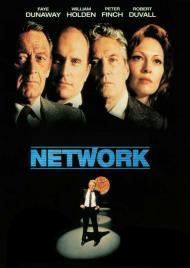



Network is a biting satire of the television industry in the 1970s. At that time there were only the big three networks NBC, CBS and ABC. The movie is set at a fictional fourth network called UBS.
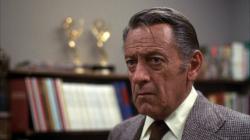
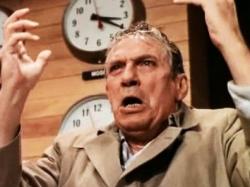
Peter Finch plays Howard Beale, longtime anchor for the UBS Evening News. After years of declining ratings he is abruptly fired by his boss, and good friend, Max Schumacher (William Holden). On the next telecast Howard announces to the world that he is going to "blow his brains out" on live television. Later, after he assures Max that he was just momentarily upset and has now come to his senses, he is allowed to appear on one last broadcast to say his farewells. He seizes the moment to launch a tirade about how he is "tired of all the bullshit". He touches a nerve with many viewers and subsequently the show takes a huge leap in the ratings.
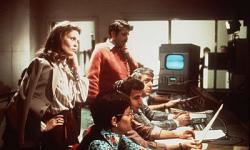
Enter the ruthlessly ambitious executive Diana Christensen (Faye Dunaway). She successfully maneuvers to take over the news department and immediately turns the evening broadcast into an entertainment type show complete with a fortune-teller and a spinning wheel and starring Howard Beale, who merely gives an impromptu rant on whatever topic he chooses. Then, as if possessed, he falls to the floor in a dead faint.
In Network's most celebrated and oft-quoted scene, Howard instructs his audience to "Get up out of your seats. Go to the window and yell - I'm as mad as Hell and I'm not going to take it anymore!"
What was broad satire in 1976 now plays presciently. The line between news and entertainment has, indeed, blurred in the years since Paddy Chayefsky wrote this brilliant screenplay.
Network has great dialogue and some very fine acting. The mood and themes of the movie are dark even when being funny. The contract negotiation scene with the Ecumenical Liberation Front is one example. In another scene William Holden's character gives an emotionally revealing speech about aging and death. It shows why he was one of the few top Hollywood actors able to survive the style and content changes that happened in the industry between the 50s and the 70s.
Faye Dunaway is also good. Her best moment is when she has sex with Max. She can only orgasm by talking about her job.
In all honesty the ending - which I won't give away - has lost some of its shock. It holds up better as comedy than satire now. Still it is a fitting finish to a thoroughly original screenplay and a superbly acted film.