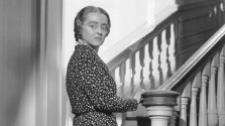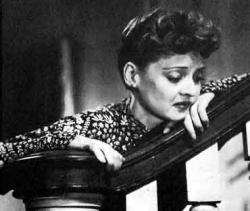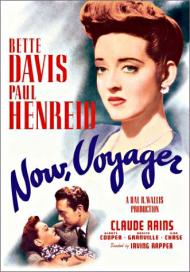



Now, Voyager is my favorite Bette Davis movie. In it she plays Charlotte Vale of the Boston Vales a very wealthy and powerful bastion of New England society. As the movie opens Charlotte is having a nervous breakdown brought on mostly by her overbearing and domineering mother (Gladys Cooper). Charlotte is the epitome of the spinster aunt. She wears dowdy dresses, sensible shoes, and unflattering eyeglasses and has thick eyebrows and an old maid hairstyle. She also exists completely under her mother's thumb.
Fate intervenes in the form of the kindly Doctor Jaquith (Claude Rains) who runs a mental health sanitarium. When the doctor interviews Charlotte we are shown - in flashback - Charlotte and her mother on a cruise. Late at night Mrs. Vale and the ship's captain are searching by flashlight for Charlotte and discover her kissing one of the crewmen inside an automobile being transported on the ship. This scene was blatantly copied in the 1997 mega-hit Titanic. Dr. Jaquith quickly realizes that Charlotte's problems all stem from her mother's iron-fisted control of her and convinces her to come to his sanitarium for a rest. After a few months she is ready to face the world and in a symbolic gesture of her newfound independence decides to go on a South American cruise.
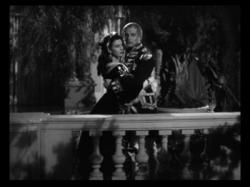
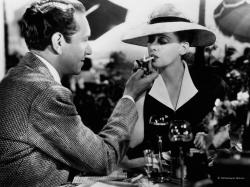
The next shot of Charlotte shows her on the gangplank of the cruise ship. The camera starts at her feet and pans up to show that she has lost weight, learned how to dress and even plucked her eyebrows and is wearing make-up. This scene was copied by Barbra Streisand in The Mirror Has Two Faces. The 'new' Charlotte meets and falls in love with the handsome and understanding Jerry Durrance (Paul Henreid fresh from his role as Victor Laszlo in Casablanca). Together they share the quintessential shipboard romance. Of course Jerry is married, but unhappily so. He has two daughters and is too noble to hurt them or his wife by getting a divorce. In one incredibly romantic scene on the balcony of a hotel looking out over Rio harbor, Jerry begins a tradition of lighting two cigarettes and giving one to Charlotte. They both realize, however, that they cannot be together.
Once back in Boston, Charlotte, with the help of her mother's nurse played by Mary Wickes (who would continue making movies well into the nineteen-nineties and is probably best remembered as Sister Mary Lazarus in the Sister Act movies) is able to overcome her mother's authority and manages to become a successful part of Boston society. A chance encounter with Jerry brings back all of their feelings for each other and leads to the final act of the movie.
Charlotte's mother's death causes her to return to Doctor Jaquith's sanitarium where she meets Jerry's troubled daughter Tina. It was explained earlier in the movie that Jerry's wife didn't want Tina and that she has been an unloved child at least as far as her mother is concerned. Charlotte and Tina quickly form a bond and eventually Tina goes to Boston to live with her. Jerry shows up for the final scene. Charlotte convinces him to let her raise the girl and as Jerry lights two cigarettes and the Max Steiner theme music swells Charlotte says, "Oh Jerry, don't let's ask for the moon. We have the stars."