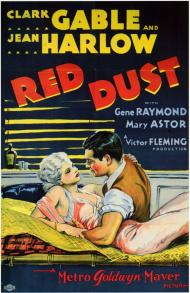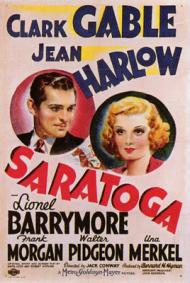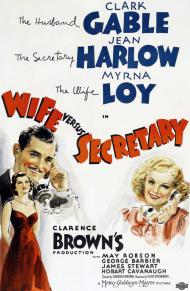



Wife vs. Secretary is probably one of the worst names for a movie ever written. That is until Snakes on a Plane came out. Both titles explain the plot of their movie quite succinctly, but Wife vs. Secretary deserved a better title. It implies an all-out feud, when in fact the movie is refreshingly subtle.
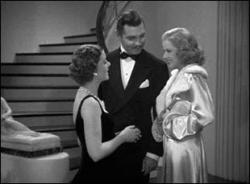
Gable and Loy play a deliriously happy, married, rich couple. It opens with the morning after he just came home from a business trip. Although they share separate bedrooms for some reason, it is made clear that they just had sex that night. They have several servants, so it must be Loy's companionship, and not her cooking and cleaning skills that attracts Gable to her, and who can blame him? Loy was one of the most charismatic actresses of her time.
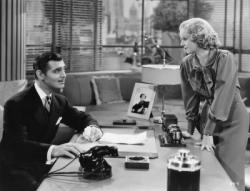
Harlow plays Gable's secretary. She is actually more like his assistant. She does far more than just answer phones and type. She is also notably attractive. People throughout the movie remark on her looks. In one scene she is dancing at a party with Gable, while three men are watching her. The two younger ones make suggestive comments and then the older one says, "Gentlemen, even I could give that little lady dictation."
The movie was made in 1936, so the sexual attitudes are, thankfully, politically incorrect. When Loy seeks comfort from her mother-in-law, after she suspects Gable of having an affair with Harlow, his mother tells her to not be too hard on him and that, "You wouldn't blame a little boy for stealing candy if left alone in a room with an open box full."
The movie starts in a safe place but then moves closer and closer to the moment of truth. At first Gable and Harlow are just employer and valued employee. After her mother-in-law puts a bug in her ear about how she should have Gable get rid of his attractive secretary, Loy begins to suspect something, even when there is nothing actually going on.
The honesty of Wife vs. Secretary is how Gable and Harlow start out with a close business relationship and how they almost become so much more. They do not plan anything. They just find themselves alone in a hotel room after having some drinks. Their progress to that point is slow but foreseeable. Loy ends up calling and Harlow answers the phone.
As expected, Loy gets upset and leaves Gable. This opens up Harlow's shot at him. After working for him all this time, she realizes that she does indeed have feelings for him. But Harlow is the noble character here and she goes to see Loy who is about to take a trip. She asks her if she is leaving Gable for good. After Loy says yes, Harlow says the movie's most famous line, "You're a fool, for which I am grateful." I am not going to ruin the ending for you completely, but it does play out nicely.
Although there are some good lines to be heard here it is often the silence that speaks volumes, whether it is Loy watching in silence or the scene of Gable and Harlow alone in the hotel room. Too often today's films want to spoon feed the mood with tons of vocal exposition. Some of those old films knew when to talk and when to let the scene speak for itself.