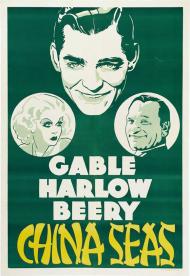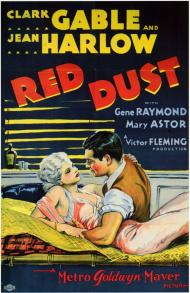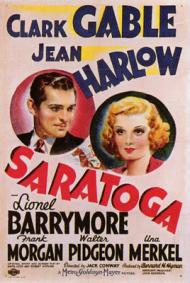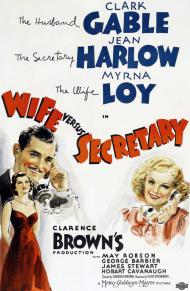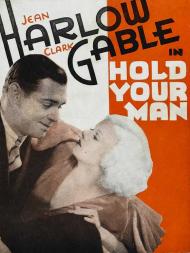



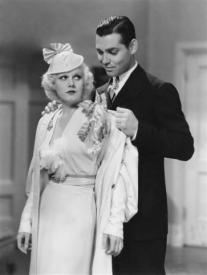
I ask you, does it get any better than Jean Harlow and Clark Gable in an Anita Loos written film from the early 1930s? Okay, so this, the 3rd of 6 pairings of Harlow and Gable, isn't the greatest movie for either of them and it does suffer from a sudden mood change half-way through, but it's still a great showcase for two of the greatest stars of the time.
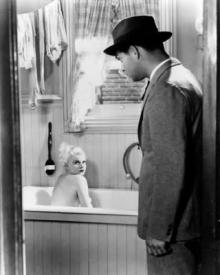
The movie starts as a romantic comedy. Gable is con artist Eddie Hall. One day while on the run from the cops he ducks into a random apartment whose door happens to be unlocked. In the bathroom of this apartment is Ruby Adams (Harlow) who happens to be taking a bubble bath. The sparks fly between the two of them almost instantly.
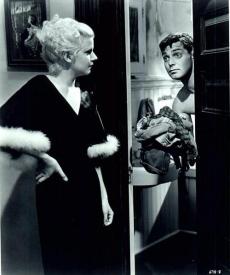
Ruby's not a hooker, but she is a fun time girl who gets by on the kindness of strangers (all male). Like most of Harlow's classic characters, she's blonde and brassy but with a heart of gold. She's soon in love with Eddie and is helping him with his con scams. First she has to get rid of Eddie's current girlfriend, Gypsy, which she does with a quick sock to the jaw.
Because this movie was released prior to the Hays Code being strictly enforced, Eddie and Ruby are allowed to have sex. They're also shown to be having a good time making their living on the wrong side of the law. This first half of the movie is the most fun and lighthearted.
The second half shifts gears sharply. As a sign of things to come under the soon to be enforced Code, Eddie and Ruby are shown being punished for their crimes and are forced to redeem themselves. When Eddie accidentally kills a man during one of their schemes, he goes into hiding, while Ruby is arrested and sent into a reformatory. We also learn that Ruby is pregnant. But will Gable do the honorable thing and come forward to marry the woman he loves?
While the story starts from Gable's point of view, this last half of the movie shows why Harlow got top billing. Eddie disappears for a long stretch while Ruby is in the reformatory. Although this part is a bit melodramatic, there are still some great moments of comic relief. Ruby runs into Gypsy, who's also in the reformatory, and they spar and fight again. The other inmates also have distinctive personalities and provide some laughs. There's the slutty preacher's daughter (who seems to be in jail simply because she slept around) and the socialist who keeps going on and on about worker's rights and the coming revolution.
Some of the best dialogue takes place between the women. "Just two weeks ago, he (Eddie) sent me ten bucks for Christmas. I bet that's a bit of news to a certain somebody." Gypsy says loudly so Ruby will overhear. To which Ruby replies, "He was tossin' ten-dollar bills to ALL the tramps at Christmas!" "Did you get yours?" Gypsy snaps back.
Harlow even sings a song at one point. Although actually calling it singing is a bit kind since she really speaks the lyrics rather than sings them. As Harlow said at the time, "They have me singing in a reformatory! My singing would be enough to get me in, but I'd never be able to sing my way out."
Gable and Harlow were the perfect onscreen couple. She was no lady and he was no gentleman and they shared a great chemistry. When they're backed by the sharp witted pen of Anita Loos, they make movie magic, even in this unevenly plotted film.