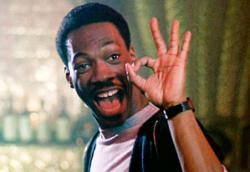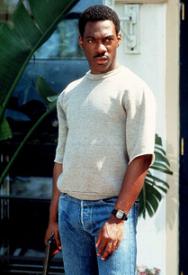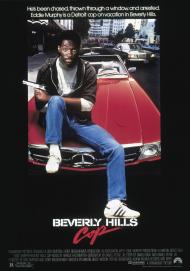



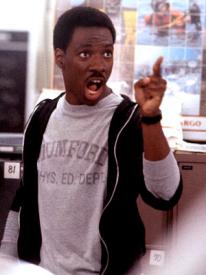
Eddie Murphy was at the very height of his career in 1984. It was his final year on Saturday Night Live and it saw the release of his biggest film to date, Beverly Hills Cop. It spawned two theatrical sequels and a made for television film. He shared top billing on his earlier successes, 48 Hours (1982) and Trading Places (1983), but Beverly Hills Cop is all and only about Eddie Murphy.
Axel Foley (what an awesome name) is a hardheaded Detroit Cop who cannot stay out of trouble with his boss. Axel is briefly reunited with an old friend, Mikey, who just returned from Los Angeles. After Mikey is murdered, Axel takes a vacation and heads to Beverly Hills to investigate his death.
The film, at first, seemed intent on showcasing the differences between the culture and finances of Detroit and Beverly Hills. The difference in wealth is obvious and Murphy is shown laughing at some California fashion, but the clash of cultures quickly takes a back seat to Eddie Murphy's antics, ad-libs and infectious laughter. This is best demonstrated by Murphy's comments about the Beverly Hills' police cruiser.
From pretending to be a Rolling Stone reporter to his, "your dick is supposed to get hard" speech, to pretending to act like a gay hustler, Eddie Murphy is a non-stop supply of entertainment. Put him with two straight laced cops and you have the start of something great. Judge Reinhold and John Ashton have a few good moments, such as the red meat conversation, but they are best when playing the straight men to Murphy.
The only person on screen who is able to steal even a moment away from Murphy is Bronson Pinchot as Serge, the heavily accented, feminine acting art dealer. Axel Foley, "Get the fuck out of here!" Serge, "No, I cannot!"
Serge works with Jenny, another old friend of Foley's, whom Mikey recently visited. Through her, Foley quickly discovers the murderer as well as uncovering a drug smuggling operation. There is plenty of action, with Foley even getting thrown through a window. The investigation and subsequent shootouts are all well and fine, but everything takes a back seat to the whirlwind that was Eddie Murphy in 1984.
Many lines and jokes in this film are credited to Murphy ad-libbing them. The original script was more action oriented and intended as a vehicle for Sylvester Stallone, who took some of the original ideas intended for this film to his ill-fated, Cobra (1986). Had Stallone stayed with this film, I doubt it would have been remembered as fondly, especially when all that is remembered is Eddie Murphy demonstrating what real comic talent can bring to a film.