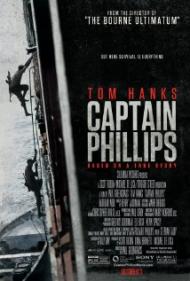



Captain phillips is based on the true story so many of us watched unfold through news reports. If you recall, Captain Phillips was in charge of a cargo ship passing the Somali coast when it was illegally boarded by four armed pirates intent on taking the ship for its content or ransom. When things did not go as the pirates planned, Captain Phillips ended up a hostage in a covered lifeboat with them, heading back to Somalia.
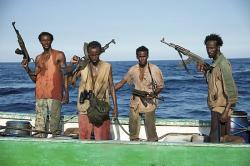
At first, his ship followed the tiny dingy until an American cruiser replaced it. It was then joined by another ship and then a carrier. This leads to the most telling political image in the film. A tiny orange motorized dingy with four armed men is being followed by three huge heavily armed navy warships. Clearly we know who is going to win this conflict but is this not indicative of the problem in fighting terrorism?
In most wars throughout history, armies knew who their opponents were by their country of origin. The war on terror is frustratingly not so clear cut. Factions all around the globe more loyal to local leaders and their religion, yes Somali is a Muslim nation, than an actual flag, take up arms against others for selfish gain. In previous decades the taking of an American ship by citizens of another country could have been considered an act of war. Today’s politicians, for better or worse, tend to blame just the individual citizens who acted.
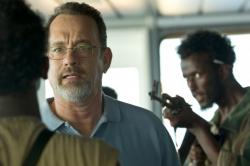
Even more interesting is that the four men who distracted three naval warships for two days are depicted as hyper active 12 year olds with guns. The pirates run onto the bridge with guns blazing and ignorantly start pushing buttons and hitting switches, thinking they know how to start the ship after the crew purposely shut her down so as to not be forced to take it to Somalia. The pirates argue more with each other than they do with Captain Phillips, who is forced to do whatever they demand. As a rule, I have always found that you can never argue with stupid.
Although Paul Greengrass has a knack for filming tension, it starts a bit slow with Captain Phillips and his wife going to the airport and saying goodbye. This helps to humanize Captain Phillips, but all we need for background is a scene where he briefly tells someone onboard that his wife and kids are fine. The film should have started onboard ship as that is where it ends. If you are not going to show his reunion with his wife then we need not see their departure.
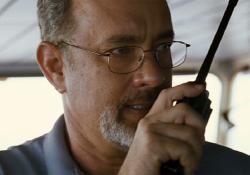
Tom Hanks delivers another solid performance. He plays Captain Phillips as a very ordinary person. He directs the men to get back to work as they grumble about it. He is clearly nervous throughout the attack. In real life, some of the crew has said that Hanks played Captain Phillips more as a hero than he actually was. Either way, the scene where Hanks is rescued and being tended to by a real life U.S. Naval corpswoman is one of the most moving I have seen this year. That scene alone could garner Hanks an award nomination.
Captain Phillips is an example of post 9/11 military challenges. It is also a personal story of mans survival, Captain Phillips’ life at the hands of armed men who are shown trying to survive their way of life as described by their warlords. Greengrass tries to show that there are two sides to this conflict, but wrong is still wrong.