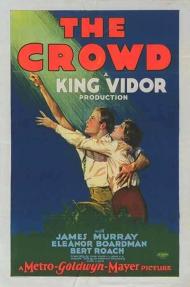



The Crowd is another movie released at the very end of the silent era that shows just how advanced the art form of the movies had become before they all began talking. Released in 1928 and directed by King Vidor, it tells the uncompromising story of John and Mary, a young married couple who endure hard times and tragedy together.
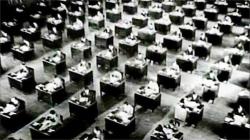
This melodrama is most famous for a long tracking shot where the camera pans up the outside of a tall office building, then in a window to reveal a huge room filled with men working at identical desks set in long rows (see photo). The camera continues to pan into the room until it finds and closes in on one man in the crowd. This simple idea has been copied many times in other films over the decades.
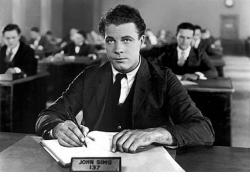
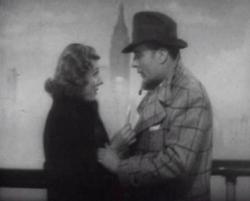
John Sims was born on July 4, 1900. His father has big dreams for his son but he dies when Johnny is only 12. When he is 21 John goes off to the big city to become a success. As he arrives by boat, with the New York skyline before him, another passenger tells him, “You've gotta be good in that town if you want to beat the crowd.”
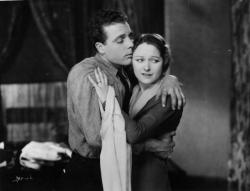
He gets a job working for a large insurance agency, goes on a blind double date with a coworker to Coney Island, and proposes to his date (Mary) at the end of the evening. They honeymoon in Niagara Falls, move into a cold water flat, and have a couple of children. Tragedy soon strikes and John and Mary's life together will never be the same.
King Vidor cast unknown actors to give the movie as authentic a feel as possible. He also shot scenes, surreptitiously, on the streets of New York City. The crowds in these scenes aren't hired extras but actual New Yorkers going about their day. In this regard the movie is an amazing time capsule of a vanished world. The theme of being just one tiny cog in a giant wheel is reinforced over and over again. The script includes some rather clever foreshadowing.
King Vidor's second wife Eleanor Boardman played Mary. She proves herself a fine dramatic actress. But it is James Murray as John Sims who really stands out. He was universally hailed for his incredibly touching performance. He is great throughout the film but is best in the scene where he contemplates suicide.
In real life James Murray was a tragic figure in early Hollywood history. He never again achieved the success of this role. By the early 30s he was drinking heavily and playing bit parts. He was eventually reduced to begging for spare change on the street and, according to Hollywood legend, one day tried panhandling a man that turned out to be King Vidor. In 1936 James Murray's body was pulled from the Hudson River. It was never ruled whether his death was an accident or suicide. Vidor was so deeply moved by his fate that he spent years writing a screenplay about Murray's life. It was never made into a movie however.
One bit of amusing trivia related to this very serious film is that it was the very first American movie to show a toilet on screen (although this isn't provable as so many silent movies have been lost over the years). According to Hollywood legend Louis B. Mayer hated this movie and in particular this scene. Irving Thalberg gave the script the green light, even though it didn't have a typical happy ending, because of Vidor's remarkable track record for MGM. Vidor filmed several different endings but he insisted that the more logical one be kept in the finished film.
The Crowd, as much of a cliche as it is to say this, is a true masterpiece of early cinema. It was one of the first 25 films to be selected for preservation in the United States National Film Registry by the Library of Congress in 1989.