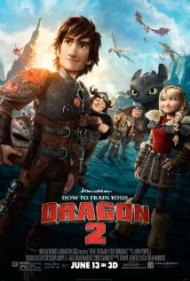



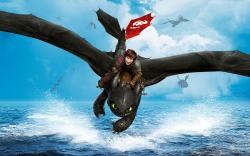
How to Train Your Dragon 2 takes place several years after the first film where Vikings and dragons were at odds until Hiccup united them. Hiccup narrates about his village, “This is Berk. Life here is amazing. Dragons used to be a bit of a problem. But now they've all moved in.” As the movie opens, Hiccup’s friends are all participating in a dragon race that involves catching sheep and depositing them in containers. The sheep were a major cause for conflict in the first film as the dragons ate the sheep, while here there is conveniently no mention as to what the dragons survive on.
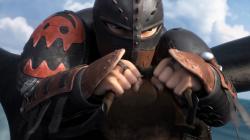
Hiccup has little interest in the contest as he and Toothless are busy exploring the world around them and mapping it. While out searching, he meets a mysterious dragon rider who turns out to be someone from his past. Whereas that person wants to collect and help dragons, Hiccup also comes across a villain aptly named Drago Bludvist, who wants to capture and control them for his own nefarious reason. Hiccup once again finds himself in the middle of a conflict.
The animation is again brilliant and the pacing quick. My adult sons enjoyed it more than they thought they would, especially an exciting battle with dragons and humans near the end. The film slows down a couple of times when conceding to some interesting drama. This is setting up very well for the third installment.
In the first film, Hiccup played the role of political negotiator. He proved his warring father wrong about dragons by making friends with them instead of fighting them. Of course, the only reason the dragons attacked in the first place was to eat the Viking's cattle. Again, I wonder what these large peaceful pets consume that does not interfere with the Viking's livelihood.
Whereas Hiccup’s pacifist, let’s just talk to the enemy, political view worked in the first film, he comes to understand that sometimes action is needed. Hiccup’s father has a history with Drago and tells Hiccup, “A man who kills without reason cannot be reasoned with.” Although my brothers never saw the politics in the first film, the How to Train Your Dragon movies are allegories to wars and dealing with an enemy in our real world.
In the first film you could easily draw parallels with the dragons and Islamist terrorists taking orders from a leader who stayed at a safe distance from all the actual attacks on innocent citizens. In this film you could do the same or you could see the dragons as symbolic of oil, with different parties fighting over them for their obvious value. Hiccup maintains his peaceful approach to dragons and madmen, but he also discovers that sometimes a stand has to be made, “A chief protects his own.”
Sure, my brothers will likely disagree with what I see in this film but movie makers, of course, put their political/social opinions into their work as much as live action films. Look no further than the openly gay character Mitch in the animated ParaNorman (2012). It served no purpose to the plot to make him gay, other than to make a social statement, so why is it hard to believe that SKG would not allow, or even push, a political message here?
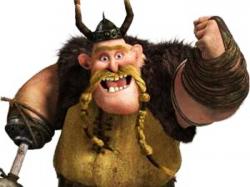
And since I mentioned Mitch, the character of Gobber has this line, “This is why I never married. Well, this and one other reason.” Sure it is subtle and could be taken many ways, but nope, it means just what I am talking about. The line was ad-libbed by Craig Ferguson but director Deblois liked it, kept it in and explained to Entertainment Weekly, “…it’s such a hand-off line that I think for the older members of the audience, it’ll take them a moment to realize, like, ‘Did he just say what I think he said?’” says DeBlois. “And then you’re moving on. [The movie] treats it like normalcy, and that’s what I really like about it. Because I’m a gay man, and I don’t draw attention to myself for that reason. It’s just a fact of who I am, and the way the world is, and it’s nice to treat it as just a passing notion that isn't’ something that people have to get so up in arms about. I think it makes people chuckle, and in every test screening we’we've had, it’s always gone over really well. I know there are probably a few people whose feathers it will ruffle, but you can’t worry too much about that. Particularly in 2014. It’s so prevalent out there, in TV shows and movies. It’s the norm, as it should be. I’m proud of it. It contributes to the daring and progressive quality of the storytelling of this [planned] trilogy.”” I could not care less if Gobber is gay or not but this does demonstrate how film makers allow and put their personal political/social opinions into their work.