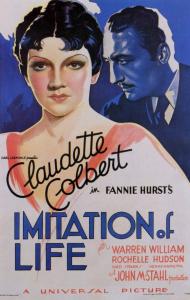



Imitation of Life is a true tearjerker in every sense of the word. It is the groundbreaking story of two women, one black and one white, who become friends and business partners. They also both happen to be widowed mothers with young daughters. The black woman's daughter looks white and is constantly trying to 'pass'. In the main thrust of the plot she disowns her mother, breaking her heart, then overcome with grief and guilt, shows up at her mother's funeral screaming and begging her forgiveness.
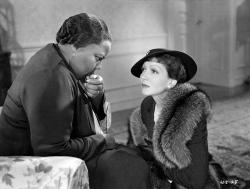
Claudette Colbert was having a great year in 1934. She won the Oscar for It Happened One Night, played Cleopatra, and starred in Imitation of Life. She looks every inch the star in this role, but somehow manages to radiate warmth and sincerity at the same time. Louise Beavers is Delilah. Although to modern viewers her role seems pathetic and insulting to people of color, she imbues the part with dignity, deep sadness, and flair. The movie really revolves around her.
Too much screen time is spent on Claudette Colbert and her beau Warren William and the silly misunderstanding with her daughter over her infatuation with him. If anything, by comparison, this makes the problems of the black characters even more real.
One of the most heart-wrenching moments occurs early in the movie when the two girls are still children. Delilah goes to pick up her daughter Peola from school, unaware that she is passing herself as a white child. The look on Peola's face when her black mother comes to her classroom looking for her is unforgettable. She tries to hide behind her book, but is quickly spotted. Humiliated, amidst the incredulous whispers of her classmates, "I didn't know she was colored", she runs home after cursing her mother.
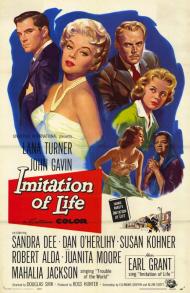
Remade in the fifties by Douglas Sirk, with Lana Turner in the Colbert role and Juanita Moore in the Louise Beavers role, Imitation of Life remains a powerful and disturbing look at race relations in terms of where we, as a culture, have come from.